
Small birds bring life to the garden with their songs and lively activity. However, identifying them can be challenging—especially if they have a subtle brown coloration. In this article, we introduce some of the most common small garden birds and provide tips on how to recognize them.

Key features for identifying small birds
Before identifying a bird, pay attention to some essential characteristics:
- Size and body shape: Is the bird round or slender? Does it have a long or short tail?
- Feather color and pattern: Look for stripes, spots, or colored markings on the chest, head, or wings.
- Beak shape: A short, strong beak suggests a seed-eater, while a thin, pointed beak is typical for insect-eaters.
- Song and calls: Many birds are easier to recognize by their song than by their appearance.
Common small garden birds
Robin (Erithacus rubecula)
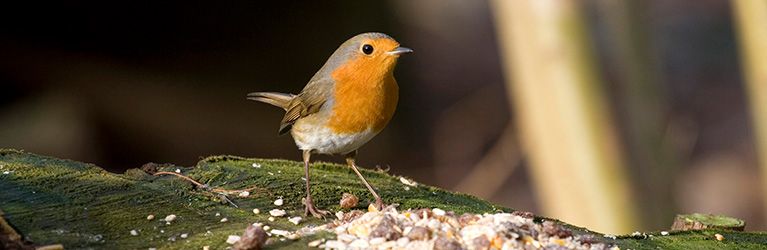
The robin is easy to identify: its orange-red breast contrasts sharply with its otherwise brown-gray plumage. It is a curious bird often seen following gardeners in search of insects. Its melodic song is most commonly heard in the early morning and late evening.
Wren (Troglodytes troglodytes)
One of the smallest birds in Europe, yet with an astonishingly loud song. The wren has a round shape, an upright tail, and brown, slightly striped plumage. It moves quickly through bushes and under hedges.
Dunnock (Prunella modularis)
Often mistaken for a sparrow, the dunnock is slimmer and has a more delicate pattern. Its feathers are a mix of brown and gray tones. It tends to stay close to the ground and has a subtle but clear song.
House sparrow (Passer domesticus)
The house sparrow is one of the most well-known urban and garden birds. Males have a gray cap, a black throat, and chestnut-brown wings, while females are more plain brown-gray. Sparrows are social birds often seen in groups.
Blue tit (Cyanistes caeruleus)
Though not brown, the blue tit is one of the most common small garden birds. It is easy to recognize with its blue head, yellow chest, and lively movements.
Great tit (Parus major)
Slightly larger than the blue tit, the great tit has striking black head feathers and a yellow breast. Its loud calls can often be heard in gardens.
How to attract small birds to your garden
To increase bird diversity in your garden, try these simple measures:
- Natural vegetation: Hedges, shrubs, and native plants provide shelter and food.
- Feeding stations: Sunflower seeds, fat balls, or insect mixes are particularly helpful in winter.
- Water sources: A shallow dish with fresh water serves as a drinking and bathing spot.
- Nest boxes: Artificial nesting aids support birds during the breeding season.

Small garden birds are not only beautiful to watch but also play an important role in the ecosystem. With a bit of patience and attention, they can be easily identified. Creating a bird-friendly garden will reward you with a vibrant and diverse bird population.