
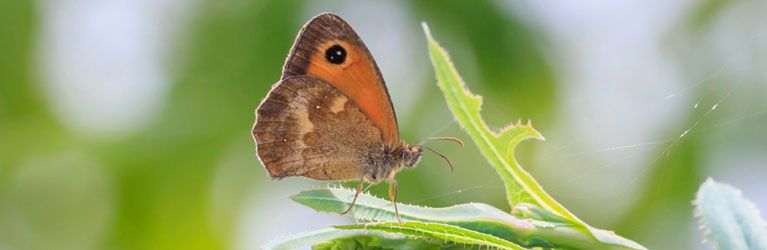
About the Gatekeeper
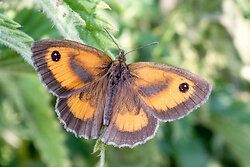
The Gatekeeper (Pyronia tithonus), also known as the Hedge Brown, is a warm orange-brown butterfly often seen fluttering along hedgerows, woodland edges and grassy paths in midsummer. Its wings are patterned with broad brown borders and a distinctive black eyespot containing two small white pupils on each forewing.
It can sometimes be confused with the Meadow Brown, but the Gatekeeper is generally smaller, brighter orange and has two white dots within the forewing eyespot rather than one. It also tends to favour sheltered places where tall grasses grow alongside hedges, scrub and woodland edges.
Gatekeepers are typically seen during the height of summer, when adults spend sunny days moving between flowers and resting among grasses and shrubs.
Food for Gatekeeper Butterflies
Adult Gatekeepers feed on nectar from a variety of summer flowers. They’re especially at home in flower-rich hedgerows, field margins, gardens and other sunny places where nectar sources grow close to tall grasses and shelter.
Planting a mix of nectar-rich flowers that bloom through midsummer can provide valuable feeding opportunities. Allowing some areas to grow a little more naturally also gives butterflies sheltered places to bask, rest and escape windy weather.
A garden doesn’t need to be perfectly manicured to be beautiful to a Gatekeeper. A sunny border beside longer grass can be far more tempting.
Plants for Gatekeeper Caterpillars
Gatekeeper caterpillars feed on a range of grasses, including fescues, bents, meadow grasses and Common Couch. The species is particularly associated with taller grassy vegetation close to hedges, scrub and woodland edges.
Leaving patches of grass longer, especially beside hedges or shrubs, can therefore provide valuable breeding habitat. Avoid cutting every grassy area short at the same time, and allow some tussocky patches to remain undisturbed.
Combine longer grasses for caterpillars with plenty of nectar-rich flowers nearby and you’ll create exactly the mix of food, shelter and breeding habitat that Gatekeepers thrive in.
Photo gallery
Our products for butterflies

Facts
| Scientific name |
Pyronia tithonus
|
|---|---|
| Family |
Nymphalidae
|
| Habitat |
Gatekeepers favour warm, sheltered habitats where tall grasses meet hedgerows, scrub or woodland edges. They are often found along field margins, country lanes, rough grassland and wildlife-friendly gardens with plenty of summer flowers. Their distribution is concentrated in warmer areas and they are mainly seen during midsummer.
|
| Food |
Adult Gatekeepers feed on nectar from a variety of summer flowers, particularly those growing along hedgerows and grassy margins. Their caterpillars feed on grasses, including fescues, bents, meadow grasses and Common Couch.
|
| Length |
30-38mm
|
| Weight |
1g
|
| Breeding season |
August
|
| Nest |
Gatekeeper butterflies do not build nests. Females lay their eggs among grasses, and the caterpillars feed on grasses such as fescues, bents and meadow grasses. Longer, tussocky grass beside hedges, scrub and woodland edges provides suitable breeding habitat.
|
| Song and call |
Gatekeeper butterflies do not produce a recognisable song or call. They communicate mainly through visual behaviour and scent rather than sound and are effectively silent to human ears.
|
| Identification |
Gatekeepers have warm orange-brown wings with broad darker borders and a black eyespot containing two small white pupils on each forewing. Males also have a dark scent patch across the forewing. They are smaller and usually brighter orange than Meadow Browns.
|
| Broods |
Eggs are laid among grasses. Usually 1 generation each year.
|
Frequently asked questions about gatekeepers
What is the difference between a gatekeeper and a meadow brown?
Gatekeepers are smaller and more orange, and their forewing eyespots usually contain two white pupils. Meadow browns normally have one.
When do gatekeeper butterflies fly?
Gatekeepers are summer butterflies, usually flying from around July into August.
How do gatekeeper butterflies overwinter?
Gatekeepers overwinter as caterpillars hidden among grasses before resuming development in spring.
How can you attract gatekeeper butterflies to your garden?
Leave areas of grass uncut and grow nectar-rich plants such as bramble, marjoram and thistles in warm, sheltered parts of the garden.