
About the Peacock Butterfly
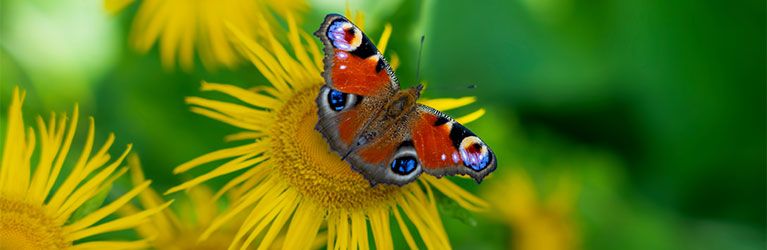
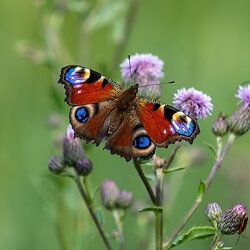
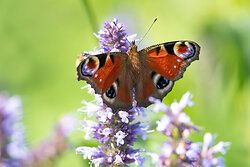
The Peacock butterfly (Aglais io) is one of the most distinctive butterflies you’re likely to see in gardens, parks and the countryside. Its deep reddish-brown wings are decorated with four large, colourful eyespots, which give the species its name and can help startle would-be predators.
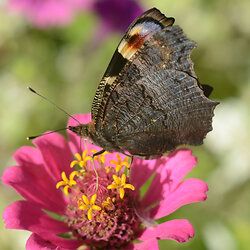
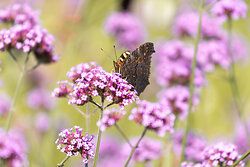
When its wings are closed, the Peacock looks completely different. The dark, almost black underside resembles a dry leaf or piece of bark, providing excellent camouflage while the butterfly rests or hibernates.
Peacock butterflies can be seen for much of the year. Adults overwinter in sheltered places such as sheds, barns, hollow trees and wood piles, emerging again on mild spring days. A new generation usually appears from midsummer onwards.
Food for Peacock Butterflies
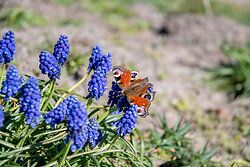
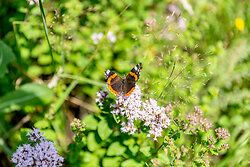
Adult Peacock butterflies feed on nectar from a wide variety of flowers. Popular sources include Buddleia, thistles, dandelions, brambles, wild marjoram and other nectar-rich plants.
Planting flowers that bloom at different times of year can provide a valuable food supply from spring into autumn. Sunny, sheltered spots are especially attractive, giving butterflies somewhere warm to feed and bask.
Later in the season, Peacocks may also feed on sugary tree sap and other naturally sweet food sources as they build up energy reserves before winter.
Plants for Peacock Caterpillars
Common Nettle is the main food plant for Peacock caterpillars. Females lay large clusters of eggs on the underside of nettle leaves, and after hatching, the young black caterpillars live and feed together in groups, often creating a noticeable silken web around the plant.
Leaving a sunny patch of nettles in a quiet corner is one of the simplest ways to support Peacock butterflies through their full life cycle. The caterpillars have food close at hand, while adults can benefit from nectar-rich flowers growing nearby.
With a mix of nettles, flowering plants and sheltered places to overwinter, your garden can offer Peacock butterflies something useful in every season.
Photo gallery
Our products for butterflies

Facts
| Scientific name |
Aglais io
|
|---|---|
| Family |
Nymphalidae
|
| Habitat |
Peacock butterflies live in gardens, woodland, hedgerows, parks, meadows and other flower-rich habitats. They need nettles for their caterpillars, nectar-rich flowers for the adults and sheltered places where they can overwinter. Peacocks are widespread and may be seen from the first warm days of spring into autumn.
|
| Food |
Adult Peacock butterflies feed on nectar from a wide variety of flowers and may also take sugary tree sap and other natural sweet liquids. Their caterpillars feed mainly on nettles, where they often live together in groups when young.
|
| Length |
5-7cm
|
| Weight |
1g
|
| Breeding season |
April - July, September
|
| Nest |
Peacock butterflies do not build nests. Females lay large batches of eggs on the underside of nettle leaves, and the young caterpillars initially live together in groups, often surrounded by silken webbing. Sunny patches of nettles provide ideal breeding habitat.
|
| Song and call |
Peacock butterflies do not have a song or call. They are generally silent, although a disturbed butterfly may produce very faint sounds associated with sudden wing movements that are unlikely to be noticed in normal garden conditions.
|
| Identification |
Peacock butterflies have deep reddish-brown wings decorated with four large, colourful eyespots. These striking markings contrast dramatically with the almost black, bark-like underside of the wings, which provides excellent camouflage when they are folded.
|
| Broods |
Large batches of eggs are laid on nettles. Usually 1 main generation each year, with adults overwintering.
|
Frequently asked questions about the peacock butterfly
Why do peacock butterflies have eyespots on their wings?
The large eyespots can startle predators by suddenly making the butterfly appear like a much larger animal when its wings open.
Do peacock butterflies overwinter as adults?
Yes. Peacock butterflies spend winter as adults in cool, sheltered places such as sheds, hollow trees and other dark spaces.
What do peacock butterfly caterpillars eat?
Peacock caterpillars feed almost exclusively on common nettles.
How can you attract peacock butterflies to your garden?
Grow nectar-rich flowers over a long season and leave a sunny patch of nettles for the caterpillars.