
About the Blackcap
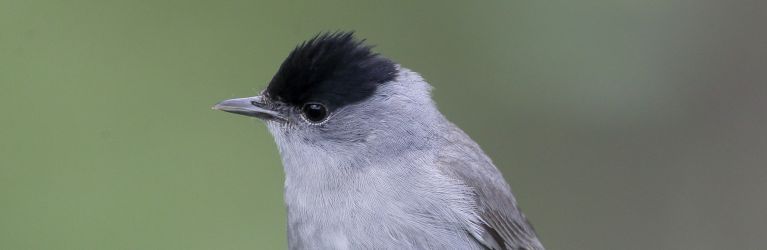
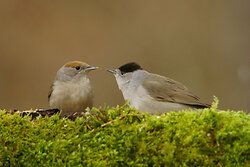
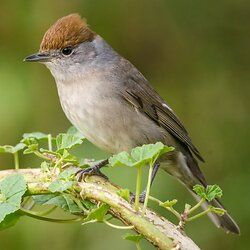
The Blackcap (Sylvia atricapilla) is a small warbler with an understated appearance and a wonderfully rich song. Males are easy to recognise by the neat black cap that gives the species its name, while females and young birds have a warm chestnut-brown cap instead. Both have soft grey-brown plumage, a pale underside and a fine, pointed bill.
Blackcaps are found in woodland, hedgerows, scrub and well-established gardens with plenty of dense vegetation. Most are summer visitors, arriving to breed in spring, but Blackcaps can now also be seen in the UK and Ireland during winter. Many of these winter visitors come from continental Europe, and garden feeding is thought to have helped make our winters an increasingly attractive option.
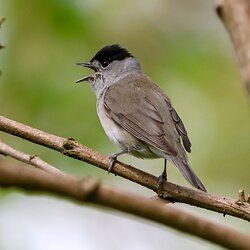
Their beautiful, fluting song is one of the best ways to notice a Blackcap. It starts with quieter, chattering notes before bursting into a clear, melodic performance that can easily stop you in your tracks.
Food for Blackcaps
Blackcaps change their diet with the seasons. During spring and summer, they mainly hunt insects and other small invertebrates, providing plenty of protein during the breeding season. Later in the year, berries and fruit become increasingly important.
Blackcaps can also become enthusiastic garden visitors in winter. They may feed on fruit and other suitable soft foods, and some readily investigate bird tables and feeding stations. Apples and other fruit can be particularly appealing during colder weather.
Planting berry-producing shrubs and maintaining an insect-friendly garden gives Blackcaps plenty of natural feeding opportunities throughout the year.
Nesting habitats for Blackcaps
Blackcaps are not cavity nesters, so traditional nest boxes are not suitable for them. Instead, they build small, cup-shaped nests among dense shrubs, brambles and other thick vegetation, usually fairly close to the ground.
You can make your garden more welcoming by providing plenty of leafy cover and allowing hedges and shrubs to grow thick enough to create quiet, concealed nesting spots. Avoid cutting back occupied nesting areas during the breeding season.
A garden filled with dense shrubs, insects and berry-producing plants can provide Blackcaps with food, shelter and somewhere to raise their young — and may reward you with one of the loveliest songs in the garden.
Photo gallery
Facts
| Scientific name |
Sylvia atricapilla
|
|---|---|
| Family |
Sylviidae
|
| Habitat |
Blackcaps favour deciduous woodland, scrub, hedgerows, parks and mature gardens with plenty of dense shrubs and leafy cover. Thick vegetation provides both nesting habitat and places to search for insects and berries. They are mainly summer visitors, although a small number may also be encountered during winter.
|
| Food |
Blackcaps mainly eat insects, spiders and other small invertebrates during spring and summer. Berries and fruit become increasingly important later in the year. Garden visitors may take apples, raisins, berries and other suitable soft foods.
|
| Length |
13-15cm
|
| Weight |
14-20g
|
| Lifespan |
1 - 13 years
|
| Breeding season |
April-June
|
| Nest |
Blackcaps build small, cup-shaped nests among dense shrubs, brambles and other thick vegetation, usually fairly low down. They do not use traditional nest boxes. Dense, undisturbed shrubs and hedges provide the most useful nesting habitat.
|
| Song and call |
The Blackcap has a rich, clear and fluting song that often begins with quieter, scratchier notes before developing into a beautiful musical phrase. Its call is much harder and more abrupt, often sounding like two stones being tapped together.
|
| Identification |
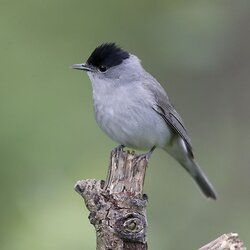
Male Blackcaps have a neat black cap on top of the head, while females and young birds have a warm chestnut-brown cap. The rest of the plumage is understated grey-brown with paler underparts and a fine, pointed bill.
|
| Broods |
4–5 pale eggs with brownish markings. Usually 1–2 broods in a season.
|
Frequently asked questions about blackcaps
Do male and female blackcaps both have black caps?
No. Adult males have black caps, while females have chestnut-brown caps. Young blackcaps also lack the adult male's distinctive black crown.
Do blackcaps stay in the UK during winter?
Yes, some do. Most British blackcaps migrate, but increasing numbers now spend the winter in the UK, particularly in gardens where food is available.
Can you feed blackcaps?
Yes. Wintering blackcaps may eat fruit, berries, raisins, suet and other soft foods. They are particularly attracted to fruit and fat-rich foods during cold weather.
Do blackcaps breed in nest boxes?
No. Blackcaps normally build their nests low in dense shrubs and vegetation rather than using nest boxes.