
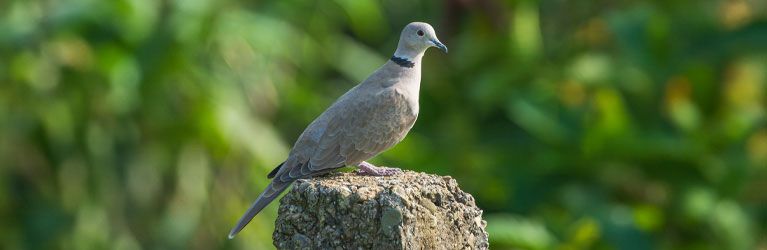
About the Collared Dove
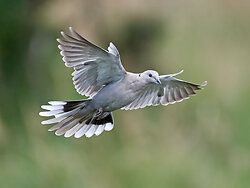
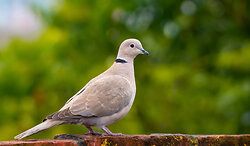
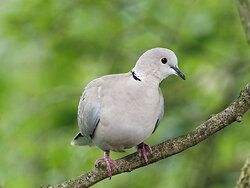
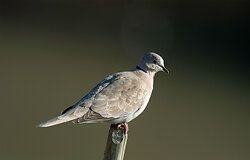
The Collared Dove (Streptopelia decaocto), also known as the Eurasian Collared Dove, is a familiar sight in gardens, towns and villages across much of the UK and Ireland. Its soft beige-grey plumage, slim body and distinctive black collar around the back of the neck make it easy to recognise. Adults also have reddish eyes and pinkish-red legs, while males and females look very similar.
Despite seeming thoroughly at home here today, Collared Doves are relative newcomers. Originally from Asia, they spread rapidly across Europe during the 20th century and first reached Britain in the 1950s. They are now widespread across Britain and Ireland, although they remain scarcer in some northern and western areas.
Collared Doves are often seen alone or in pairs, although groups may gather where food is plentiful. Their repetitive three-note cooing call is one of their most familiar features and can be heard throughout much of the year.
Food for Collared Doves
Collared Doves mainly eat seeds and grains, along with buds and young shoots. Their preference for feeding on the ground or flat surfaces means they’re regular visitors to gardens with bird tables and ground feeding areas.
Seed mixes, sunflower seeds and grains are all suitable foods to offer. Because Collared Doves are larger than many garden birds, a sturdy bird table or spacious ground feeder gives them plenty of room to feed comfortably.
You can also support them naturally by allowing some plants to produce seed and by creating a varied garden with shrubs, trees and other vegetation.
Nesting habitats for Collared Doves
Collared Doves do not use traditional enclosed nest boxes. Instead, they build relatively simple platform nests from twigs, usually in trees or dense shrubs and sometimes on suitable parts of buildings.
They can have several nesting attempts in a year and, when conditions are favourable, are capable of nesting outside the typical spring and summer breeding season. Each clutch usually contains two eggs.
Trees, tall shrubs and quiet, sheltered garden corners can all provide useful nesting opportunities. Keeping established vegetation in place gives Collared Doves somewhere secure to build their nest while also providing cover for plenty of other garden wildlife.
Their gentle colouring, distinctive collar and unmistakable coo make the Collared Dove a familiar character around homes and gardens throughout much of the UK and Ireland.
Photo gallery
Facts
| Scientific name |
Streptopelia decaocto
|
|---|---|
| Family |
Columbidae
|
| Habitat |
Collared Doves live mainly around towns, villages, farms and gardens, particularly where trees and shrubs provide nesting sites and open areas offer easy access to food. They are closely associated with human settlements and regularly visit garden feeding areas. Collared Doves can be seen throughout the year.
|
| Food |
Eurasian Collared Doves mainly eat seeds and grains, along with smaller amounts of buds and other plant material. Garden visitors readily take seed mixes, sunflower seeds and grains, preferably offered on a spacious bird table or ground feeding area.
|
| Length |
31cm
|
| Weight |
150-225g
|
| Lifespan |
1 - 17 jaar
|
| Breeding season |
March - April
|
| Nest |
Eurasian Collared Doves build simple platform nests from twigs in trees, shrubs and occasionally on suitable parts of buildings. The nest can look surprisingly flimsy compared with those of many smaller birds. They do not normally use enclosed nest boxes.
|
| Song and call |
The Eurasian Collared Dove is best known for its repetitive three-note coo, usually delivered again and again from a tree, rooftop or other prominent perch. It also produces a harsh, nasal flight call, which sounds surprisingly different from its gentle song.
|
| Identification |
Eurasian Collared Doves have pale beige-grey plumage, a long tail and a narrow black collar across the back of the neck. Adults have reddish eyes and pinkish-red legs. Males and females look very similar, while juveniles lack the distinctive black collar.
|
| Broods |
Usually 2 white eggs. Several broods may be raised in a season.
|
Freuqently asked questions about the collared dove
What is the difference between a collared dove and a feral pigeon?
Collared doves are smaller and paler than most feral pigeons and have a narrow black collar around the back of the neck. Feral pigeons are stockier and extremely variable in colour.
How many times a year do collared doves breed?
Collared doves can raise several broods in a year, often beginning early in spring and continuing through much of the warmer season.
How long have collared doves lived in the UK?
Collared doves first established themselves as breeding birds in Britain during the 1950s after spreading rapidly westwards across Europe.
What food can you give collared doves?
Collared doves mainly eat seeds and grains. They readily use bird tables and ground-feeding areas stocked with suitable seed mixes.