
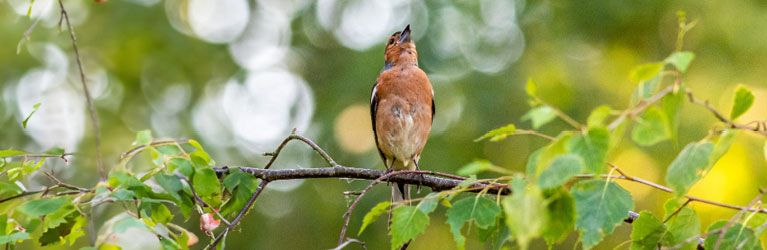
About the Chaffinch
The Chaffinch (Fringilla coelebs) is one of the most widespread and familiar finches in the UK and Ireland. One of its best identification features is the bold white pattern on the wings, which becomes particularly noticeable when the bird takes flight.
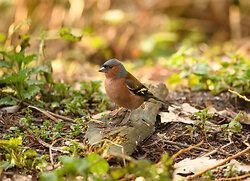
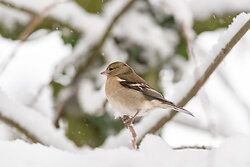
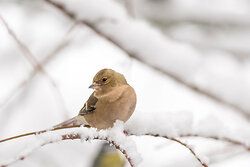
Male Chaffinches are especially colourful, with a warm pinkish-red breast and cheeks, a blue-grey crown and contrasting white wing bars. Females are more subtly dressed in shades of brown and grey, but their white wing markings and white outer tail feathers help distinguish them from other small brown garden birds. Young Chaffinches look similar to females.
Chaffinches can be found throughout the year in gardens, woodland, farmland and parks. During winter, resident birds are joined by Chaffinches arriving from northern Europe, so you may notice larger numbers gathering together in search of food. Their loud, lively song is a familiar sound during the breeding season and is often heard before the bird itself comes into view.
Food for Chaffinches
Chaffinches eat a varied diet of seeds and invertebrates. Seeds become particularly important outside the breeding season, while insects and other small invertebrates provide valuable protein when adults are raising their young.
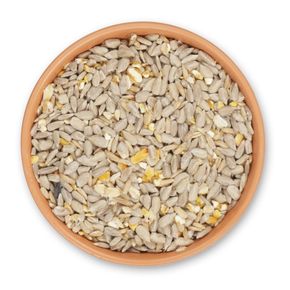
Sunflower seeds and good-quality seed mixes are suitable foods to offer in the garden. Chaffinches often prefer feeding on the ground rather than clinging to hanging feeders, so keep an eye underneath bird tables and feeders where they’ll happily pick up fallen seeds.
You can also make your garden more appealing by leaving some natural areas where Chaffinches can forage for seeds and insects among plants, borders and leaf litter.
Nesting habitats for Chaffinches
Chaffinches are not cavity nesters, so traditional nest boxes aren’t suitable for them. Instead, they build beautifully camouflaged, cup-shaped nests in trees and shrubs.
The female constructs the nest using materials such as moss, grass and other plant material, with lichen and spiders’ webs helping to bind and disguise the outside.
Planting trees and dense shrubs and keeping established hedges provides Chaffinches with valuable nesting cover. A wildlife-friendly garden rich in insects and natural vegetation also gives adults more places to find the food they need when raising their chicks.
Photo gallery

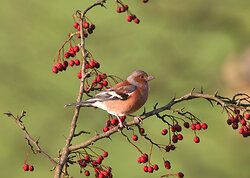
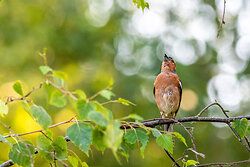
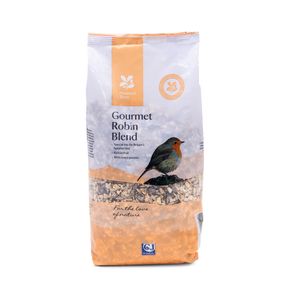
Our food for chaffinches
Facts
| Scientific name |
Fringilla coelebs
|
|---|---|
| Family |
Fringillidae
|
| Habitat |
Chaffinches live in woodland, farmland, parks, gardens and hedgerows, particularly where mature trees and shrubs are available. They feed both among trees and on the ground, so a mixture of vegetation and open areas suits them well. Chaffinches can be seen throughout the year, with numbers changing seasonally as some birds migrate.
|
| Food |
Chaffinches eat seeds and other plant material, while insects and small invertebrates become particularly important during the breeding season. They readily take sunflower seeds and good-quality seed mixes and often prefer feeding on the ground beneath bird tables and feeders.
|
| Length |
15cm
|
| Weight |
19-23g
|
| Lifespan |
1 - 15 years
|
| Breeding season |
March - July
|
| Nest |
Chaffinches build beautifully camouflaged, cup-shaped nests in the forks of trees and shrubs. The nest is made from plant material, moss and grass and disguised with lichen and spiders’ webs. They do not normally use nest boxes.
|
| Song and call |
The Chaffinch has a strong, cheerful song that starts with a rapid series of repeated notes and finishes with a distinctive flourish. Its common call is a short, clear “pink” or “fink” sound. During the breeding season, males sing repeatedly from trees and other prominent perches.
|
| Identification |
Male Chaffinches have a warm pinkish-red breast and cheeks, a blue-grey crown and contrasting black-and-white wings. Females are more muted grey-brown but still show two clear white wing bars and white outer tail feathers. Juveniles resemble females.
|
| Broods |
Frequently asked questions about chaffinches
What food can you give chaffinches?
Chaffinches enjoy sunflower seeds and mixed seed, particularly when scattered on the ground or offered on a low feeding table.
Do chaffinches breed in nest boxes?
No. Chaffinches build compact cup-shaped nests in trees and shrubs rather than using nest boxes.
Are chaffinches rare in the UK?
No. Chaffinches are among the UK's most widespread birds and occur in woodland, farmland, parks and gardens.
How can you recognise a female chaffinch?
Female chaffinches are grey-brown with distinctive pale wing bars and white outer tail feathers. They are much less colourful than males.