

About the Greenfinch
The Greenfinch (Chloris chloris) is a sturdy, compact finch with a powerful bill that’s perfectly suited to cracking open tough seeds. Males stand out with their bright olive-green plumage and vivid yellow flashes on the wings and tail. Females and young birds are more understated, with greyer-brown plumage and softer yellow markings on the wings.
Greenfinches are sociable birds and often arrive at garden feeding stations in small groups. Their song is a lively mix of trills and twittering notes, often interrupted by a distinctive drawn-out, nasal call that can be heard from high in the treetops.
At first glance, Greenfinches can sometimes be confused with Siskins because both have green and yellow colouring. Greenfinches, however, are noticeably bulkier, with mostly unstreaked plumage and a strong, pale bill. Siskins are smaller and more heavily streaked, while males also have a distinctive black crown and throat.
Food for Greenfinches
If Greenfinches are visiting your garden, you can encourage them to return by offering plenty of nutritious seeds. Their strong bills make them particularly well adapted to tackling larger and tougher seeds.
Sunflower seeds, sunflower hearts, nyjer seed and good-quality seed mixes are all excellent choices. Greenfinches will happily use both hanging feeders and bird tables, and they often feed alongside other finches.
Keeping feeders clean is especially important for Greenfinches. Regularly remove old food and droppings, wash feeders thoroughly and move feeding areas from time to time to help reduce the spread of disease.
Nesting habitats for Greenfinches
Greenfinches are not cavity nesters, so traditional nest boxes are unlikely to tempt them. Instead, they build open, cup-shaped nests tucked safely among dense hedges, shrubs and small trees.
You can help by growing thick, wildlife-friendly shrubs and allowing parts of your hedges to stay naturally dense. These sheltered areas provide valuable nesting cover as well as protection from predators. A slightly less tidy corner of the garden can be just what a Greenfinch is looking for.
Photo gallery

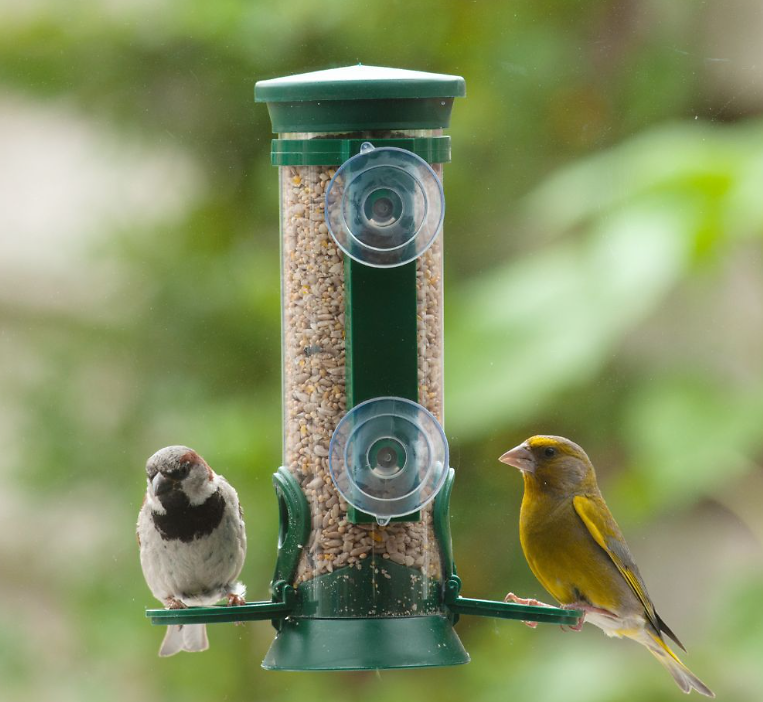

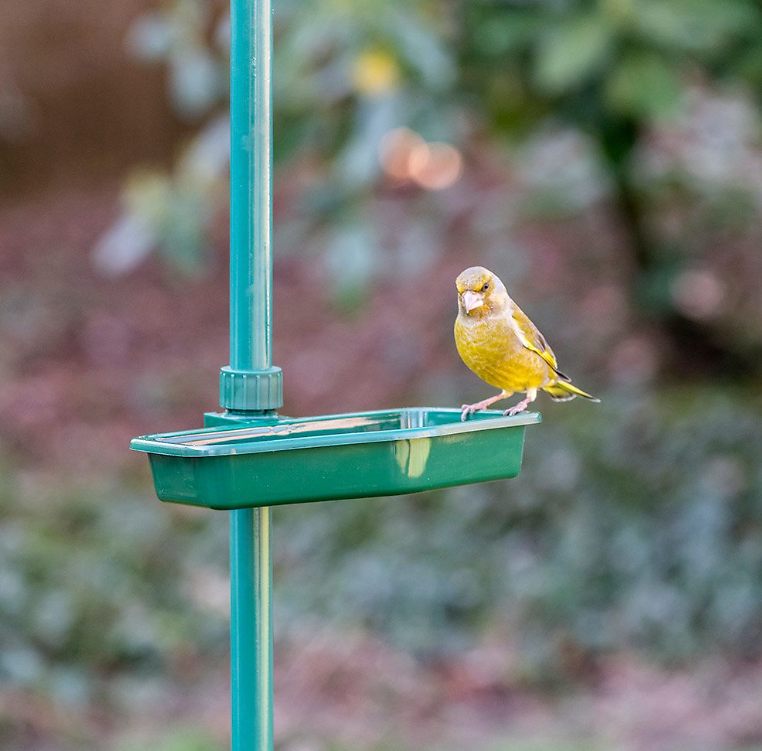

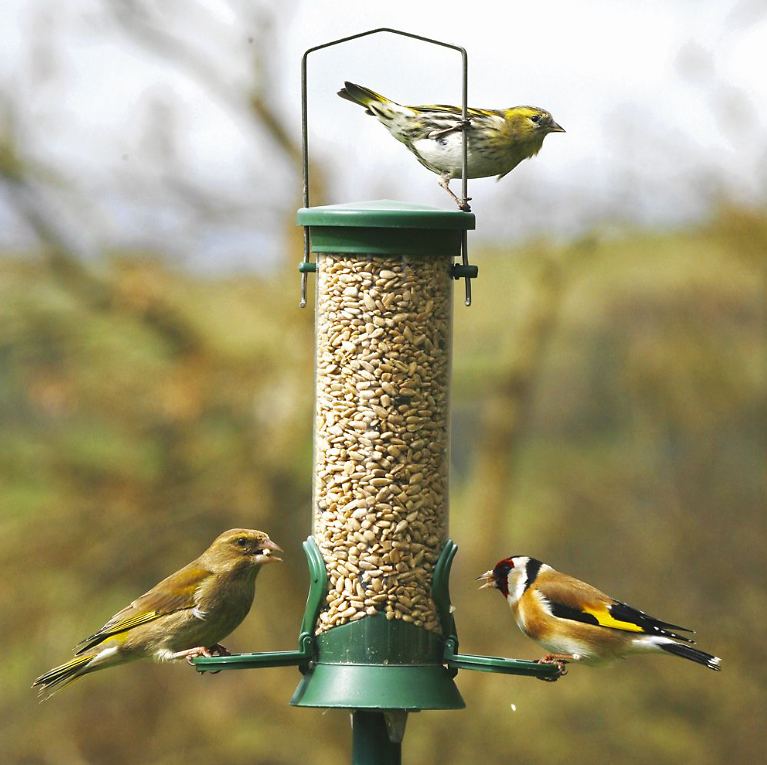


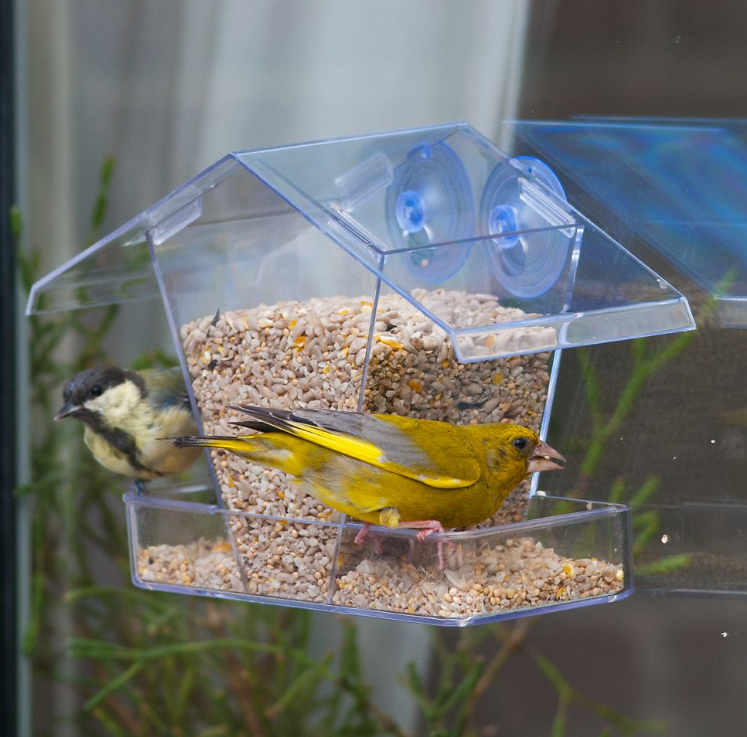
Our food for the greenfinch


Facts
| Scientific name |
Carduelis chloris
|
|---|---|
| Family |
Fringillidae
|
| Habitat |
Woodland edges, thick hedgerows, parks, orchards, and suburban gardens.
|
| Food |
Greenfinches mainly eat seeds, using their powerful bills to tackle even relatively tough shells. They feed on seeds from wild plants as well as garden bird food. Sunflower seeds, sunflower hearts, nyjer seed and good-quality seed mixes are all suitable choices.
|
| Length |
14-15cm
|
| Weight |
26-36g
|
| Lifespan |
1 - 13 years
|
| Breeding season |
April - August
|
| Nest |
A bulky cup of twigs, moss, and grass lined with roots and feathers. They do not use standard enclosed nest boxes. Instead, they nest deep within dense evergreen shrubs, thick ivy, or thorny hedges.
|
| Song and call |
Rapid, canary-like trills and warbles, highlighted by a very distinct, nasal "wheeze" call.
|
| Identification |
Known for their stout, conical bills and social feeding habits. While sociable, they can be quite bold and protective over their spot at the seed feeder.
|
| Broods |
4–6 pale blue eggs, lightly speckled with purple and brown. Usually raise 2 to 3 broods per year.
|
Videos
Frequently asked questions about the greenfinch
Do greenfinches breed in nest boxes?
Not usually. Greenfinches normally build nests in dense shrubs, conifers, hedges and climbing plants rather than using nest boxes.
What food can you give greenfinches?
Sunflower hearts and sunflower seeds are particularly attractive to greenfinches. They also eat other seeds and may take peanuts.
Why do you often see greenfinches in groups?
Greenfinches are sociable outside the breeding season and often form flocks where food is plentiful, including around garden feeding stations.
How many times a year do greenfinches breed?
Greenfinches commonly raise two or three broods between spring and late summer.