

About the Hedgehog
The European Hedgehog (Erinaceus europaeus) is one of the most recognisable wild mammals in the UK and Ireland. Its back and sides are covered in thousands of stiff spines, while the face, legs and underside are covered in coarse brown fur. When threatened, a hedgehog can curl tightly into a ball, using its spines as a remarkably effective suit of armour.
Hedgehogs are mostly active after dark, spending the night roaming through gardens, hedgerows and other green spaces in search of food. During the day they usually rest in hidden nests beneath shrubs, log piles, sheds or dense vegetation. Gardens can be especially valuable when they provide a mixture of shelter, natural food and easy routes between neighbouring spaces.
In winter, hedgehogs usually hibernate to conserve energy when natural food becomes scarce. They build well-insulated nests from leaves and other vegetation, although they may occasionally wake and move to another nest during milder periods.
Food for Hedgehogs
Hedgehogs are mainly insect and invertebrate eaters. Their natural diet includes beetles, caterpillars, worms and a variety of other small creatures found among grass, leaf litter and soil. A wildlife-friendly garden rich in insects therefore provides plenty of opportunities for natural foraging.
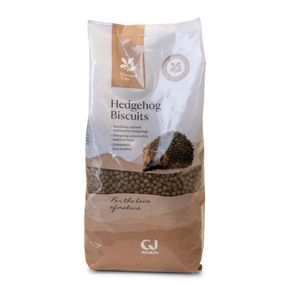
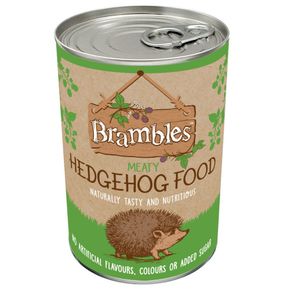
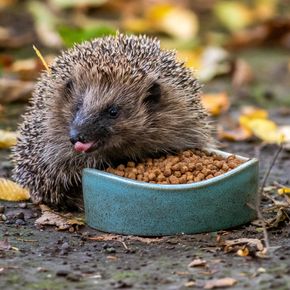
If you want to offer supplementary food, choose a good-quality meat-based hedgehog food, meaty cat or dog food, or dry cat biscuits. Always provide a shallow dish of fresh water alongside it. Food is best offered at ground level, and a covered hedgehog feeding station can help prevent larger animals from helping themselves first.
Milk and bread should not be offered to hedgehogs. Fresh water and suitable meat-based foods are much better choices.
Homes for Hedgehogs
Hedgehogs make several different types of nest throughout the year for resting, breeding and hibernation. Natural nest sites can be found beneath hedges, shrubs, piles of leaves and logs, compost heaps and sheds.
A purpose-built hedgehog house can provide extra shelter where natural nesting places are limited. Position it in a quiet, sheltered part of the garden, ideally beneath or beside vegetation, and leave some dry leaves nearby that a hedgehog can use as bedding. Avoid placing food inside an occupied hedgehog house, as hedgehogs normally prefer to eat and sleep in separate places.
One of the most useful things you can do is make your garden easier to explore. Hedgehogs need to move between different feeding and nesting areas, so small gaps beneath fences and access between neighbouring gardens can make a big difference. Add dense planting, log piles and slightly wilder corners, and your garden can become part of a much larger hedgehog-friendly habitat.
Photo gallery


Our products for hedgehogs





Facts
| Scientific name |
Erinaceus europaeus
|
|---|---|
| Family |
Erinaceidae
|
| Habitat |
Hedgehogs live in gardens, parks, hedgerows, farmland edges and other green spaces with plenty of ground-level cover. They favour connected habitats where they can move freely between feeding areas and find sheltered places beneath vegetation, logs and leaves. Gardens can be particularly valuable when they provide access to neighbouring green spaces.
|
| Food |
Hedgehogs mainly eat beetles, caterpillars, worms and a wide variety of other invertebrates. Supplementary food can include good-quality meat-based hedgehog food, meaty cat or dog food or dry cat biscuits, with fresh water always available. Milk and bread should not be offered.
|
| Length |
25cm
|
| Weight |
1000g
|
| Lifespan |
1 - 10 years
|
| Breeding season |
May - July
|
| Nest |
Hedgehogs build nests beneath hedges, shrubs, log piles, sheds, compost heaps and dense vegetation. They use different nests for resting, breeding and hibernation. A purpose-built hedgehog house placed in a quiet, sheltered area can provide an additional safe nesting site.
|
| Song and call |
Hedgehogs can be surprisingly noisy for such secretive animals. They commonly snuffle, grunt and rustle while searching for food, while courtship can involve loud huffing and snorting. Young hedgehogs may also make high-pitched squeaks or whistles.
|
| Identification |
Hedgehogs have a rounded body covered across the back and sides with thousands of stiff brown-and-cream spines. The face, legs and underside are covered with coarse brown fur, and the snout is long and pointed. When threatened, they can curl tightly into a protective ball.
|
| Broods |
Usually 4–5 hoglets in a litter, although litter size varies. Usually 1–2 litters may be produced in a year.
|
Frequently asked questions about hedgehogs
When do hedgehogs hibernate?
Hedgehogs usually hibernate from around November until March or April, although timing varies according to weather, food availability and the individual animal.
What can you feed a hedgehog?
Offer specialist hedgehog food or meat-based cat or dog food, together with fresh water. Avoid milk and bread, which are unsuitable.
How can you make your garden hedgehog-friendly?
Create gaps beneath fences, provide dense vegetation and leaf piles, avoid pesticides and slug pellets, offer fresh water and provide a sheltered hedgehog house.
How many young do hedgehogs have?
Hedgehog litters commonly contain around four or five hoglets, although larger and smaller litters occur.
Are hedgehogs protected in the UK?
Yes. Hedgehogs receive legal protection in the UK, including protection from certain methods of capture or killing.