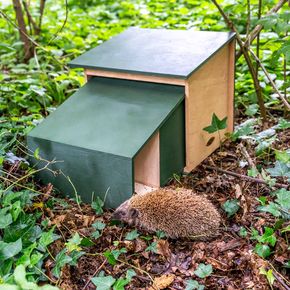
Hedgehogs are valuable visitors to your garden and play an important role in a healthy ecosystem. Unfortunately, increasingly tidy gardens leave them with fewer piles of leaves, log stacks and dense hedges in which to build a nest. A hedgehog house provides an alternative shelter: somewhere to rest during the day, raise young in summer and hibernate from around mid-November to the end of March.
Which hedgehog house is right for your garden?
Our hedgehog houses have been developed with hedgehog specialists and carefully tested for safety, ventilation and protection from predators. Compare the models below to find a hedgehog shelter that suits your garden.
| |
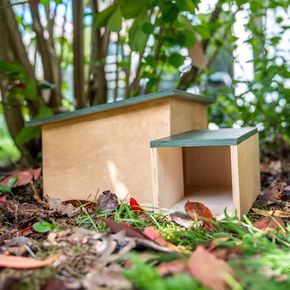
Hedgehog House XL |
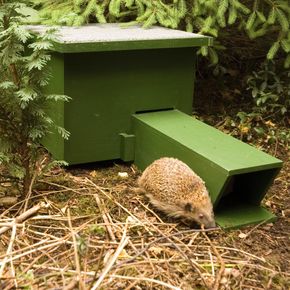
Deluxe Hedgehog House XXL |
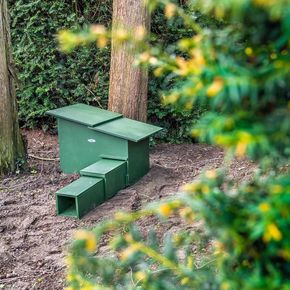
Deluxe Hedgehog House with Camera Bundle |
| Price |
£99.99 |
£139.99 |
£329.99 |
| Material |
FSC® 100% plywood |
FSC® 100% wood |
FSC® 100% wood + HD camera |
| Dimensions (W × H × L) |
57 x 36 x 39 cm |
41 x 61 x 51 cm |
41 x 61 x 51 cm |
| Entrance tunnel |
Internal tunnel with a 90° turn |
Long, straight entrance tunnel |
Long, straight entrance tunnel |
| Reviews |
See product reviews |
See product reviews |
See product reviews |
| Best suited to |
Smaller gardens, entry-level option |
Larger gardens, mother with young |
Anyone wanting to see who moves in |
If you have a small garden or a more limited budget, the Hedgehog House XL is a practical option. If you would like to provide space for a hedgehog family, choose the Deluxe Hedgehog House XXL. The camera bundle lets you observe visitors without opening the house.
How do these houses differ from cheaper hedgehog shelters?
You can buy hedgehog houses in many places. Some cost just a few pounds, while our models start at £99.99. This difference in price is worth considering: some inexpensive decorative houses are made from thin timber and lack ventilation holes or a protective entrance tunnel, which can make them less suitable for hedgehogs.
There are three important features to look for in a hedgehog house:
- Ventilation and drainage. Hedgehogs breathe and moisture builds up inside a nest. Without enough airflow, bedding can stay damp, increasing the risk of respiratory problems and fungal growth. Some inexpensive hedgehog houses have insufficient ventilation.
- A protective entrance tunnel. A narrow entrance with a bend helps discourage cats, dogs and foxes from reaching the nest and reduces draughts. Not every hedgehog shelter has an appropriate tunnel.
- Enough space inside. There should be room for a full nest of leaves, which the hedgehog builds itself, and for a mother with her young. Some smaller houses do not provide enough space.
We design our hedgehog houses in consultation with hedgehog specialists. Our models undergo practical testing in gardens for safety, ventilation and protection against predators. Purchases also help support conservation and habitat restoration through our work with nature conservation partners, including the National Trust.
Where and how should you position a hedgehog house?
- Choose a quiet, shaded spot sheltered from the wind, such as beneath a hedge or behind a shed.
- Point the entrance towards the east or south-east, away from the prevailing south-westerly wind.
- Place the house directly on the ground. Hedgehogs are not good climbers, so the entrance must be accessible at ground level. If the ground gets waterlogged, put a thin paving slab underneath to stop the house sinking into mud without raising the entrance too far.
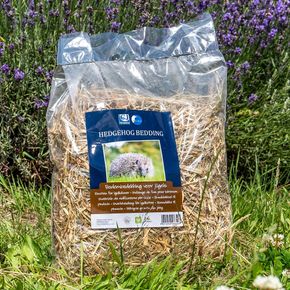
- Put a few dry leaves or some hedgehog bedding inside. The hedgehog can build the rest of its nest itself.
- Create a 13 × 13 cm hedgehog highway opening in your fence, so hedgehogs can move between gardens.
April or May, or September at the latest, is a good time to put out a hedgehog house so that the animals have time to get used to it before hibernation.
When to clean a hedgehog house – and when to leave it alone
Clean the house once a year in April or May, after hibernation and well before the main breeding season, but only when you are certain it is empty. Remove old nesting material, rinse with warm water, allow the house to dry completely and check the roof and structure. Cleaning products are not needed.
From late May to September, a mother may be raising young inside. From around mid-November to the end of March, a hedgehog may be hibernating. Do not open or move an occupied house. Disturbing a hibernating hedgehog uses up precious energy reserves. If you find a toad or mouse in the house, leave it undisturbed.
Frequently asked questions about hedgehog houses
Will a hedgehog actually use the house?
That depends mainly on where you put it and a little patience. In a garden where hedgehogs already visit, a well-placed house may be discovered within a few weeks or months. If you have never seen a hedgehog nearby, it may take longer. A fence opening and a feeding station can help.
Can I put out more than one hedgehog house?
Hedgehogs use several shelters within their home range. Placing two or three houses in quiet parts of your garden can increase the chance that one will be used.
Why is a good hedgehog house more expensive than a DIY-store model?
The main differences are ventilation, drainage and an entrance tunnel that helps deter predators. Our houses are developed with hedgehog specialists and tested in real gardens. More durable materials and considered construction contribute to the price.
Can I raise the hedgehog house on legs?
Hedgehogs are not good climbers, so the entrance should remain at ground level. To reduce rising damp, you can put a thin paving slab or a few flat stones beneath the house, provided the entrance stays accessible.
How can I tell whether a hedgehog is inside?
Look for small, dark droppings near the entrance or a well-worn path leading to it. In autumn, you may notice leaves partly blocking the entrance; this can be a sign that a hedgehog is preparing to hibernate.