
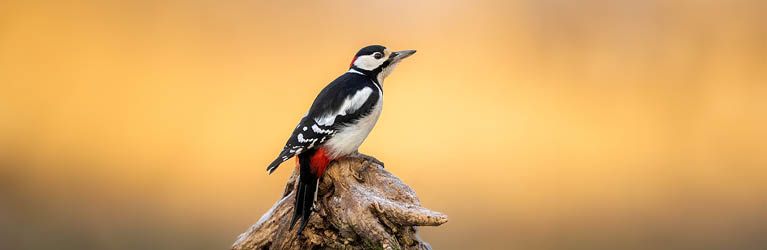
About the Great Spotted Woodpecker
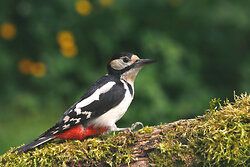
The Great Spotted Woodpecker (Dendrocopos major) is a striking woodland bird with bold black-and-white plumage and a vivid red patch beneath the tail. Males also have a red patch on the back of the head, while females do not. Young Great Spotted Woodpeckers are easy to recognise by their red crown.
Around the size of a Blackbird but more slender, the Great Spotted Woodpecker has strong feet for clinging to tree trunks and a powerful bill for searching beneath bark and excavating wood. Its bouncing, undulating flight is another useful clue when identifying one on the move.
You may hear a Great Spotted Woodpecker before you see it. In spring, its rapid drumming carries through woodland, parks and gardens as birds advertise their presence. Unlike a song, this familiar woodland soundtrack is created by hammering the bill rapidly against a resonant branch or trunk.
Great Spotted Woodpeckers are widespread across much of Britain. They are much newer arrivals in Ireland, where breeding was first confirmed in Northern Ireland in 2006 and the Republic of Ireland in 2009. Their Irish range has continued to expand, making a sighting there an increasingly realistic treat.
Food for Great Spotted Woodpeckers
Great Spotted Woodpeckers have a varied diet. They use their strong bills to search bark and dead wood for insects and larvae, while seeds also form an important part of their natural diet. They may occasionally take eggs or young birds too.
Garden feeders can provide a valuable extra food source, and Great Spotted Woodpeckers are particularly fond of peanuts and suet. They may cling confidently to suitable hanging feeders, giving you a wonderful close-up view of their colourful plumage.
Mature trees and areas of dead wood are equally valuable, creating natural feeding opportunities by supporting the insects and larvae these woodpeckers search for.
Nesting habitats for Great Spotted Woodpeckers
Great Spotted Woodpeckers are cavity nesters, but they usually make their own nest hole rather than relying on a traditional garden nest box. Each spring, a pair excavates a cavity in a suitable tree, often choosing softer or decaying wood that is easier to work.
If you have mature trees in your garden, keeping them healthy and retaining safe standing dead wood where appropriate can provide valuable feeding and nesting habitat. Old trees are particularly important because their cracks, cavities and softer timber support a wealth of wildlife.
With mature trees, plenty of insects and a well-stocked feeder, you may be lucky enough to hear that unmistakable drumming — or spot a flash of red, black and white making its way up a tree trunk.
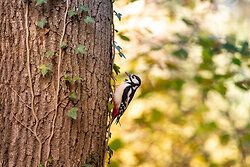
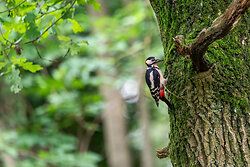
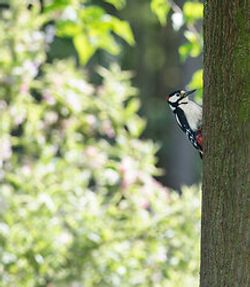
Photo gallery



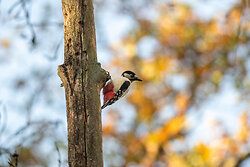

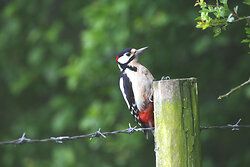
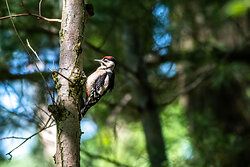
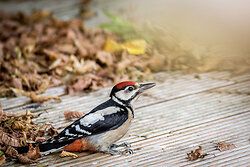
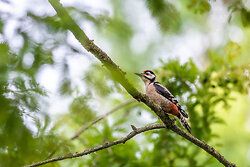
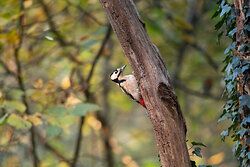
Our products for the great spotted woodpecker


Facts
| Scientific name |
Dendrocopos major
|
|---|---|
| Family |
Picidae
|
| Habitat |
Great Spotted Woodpeckers live in woodland, parks and mature gardens with plenty of established trees. Old and dead trees are especially valuable because they provide insects, softer wood for excavation and potential nesting sites. They are resident and can be seen throughout the year in suitable areas.
|
| Food |
Great Spotted Woodpeckers eat insects and larvae found in bark and dead wood, as well as seeds, nuts and occasionally eggs or young birds. At garden feeders they are particularly fond of peanuts, sunflower seeds and energy-rich suet foods.
|
| Length |
23-26cm
|
| Weight |
70-100g
|
| Lifespan |
1 - 11 years
|
| Breeding season |
April-Juni
|
| Nest |
Great Spotted Woodpeckers usually excavate their own nest cavity in a tree, often choosing softer or decaying wood. Mature trees and safe standing dead wood therefore provide particularly valuable nesting habitat. They do not normally depend on traditional nest boxes.
|
| Song and call |
The Great Spotted Woodpecker has a sharp, explosive call that is often repeated when the bird is alarmed or communicating. During spring, it is even better known for its rapid drumming, created by striking the bill against a resonant branch or trunk to advertise its territory.
|
| Identification |
Great Spotted Woodpeckers have bold black-and-white plumage with large white shoulder patches and bright red feathers beneath the tail. Adult males have a red patch on the back of the head, while females do not. Juveniles are easily recognised by their red crown.
|
| Jongen |
4–7 glossy white eggs. Usually 1 brood in a season.
|
Frequently asked questions about great spotted woodpeckers
Do great spotted woodpeckers breed in nest boxes?
No. Great spotted woodpeckers normally excavate their own nesting cavities in trees rather than using standard nest boxes.
Do great spotted woodpeckers visit bird feeders?
Yes. Great spotted woodpeckers regularly visit garden feeders, particularly for peanuts, sunflower seeds, nuts and suet products.
Why do great spotted woodpeckers raid nest boxes?
Great spotted woodpeckers may occasionally take eggs or nestlings from nest boxes as a natural source of protein. Metal entrance plates can help protect vulnerable boxes.
Are great spotted woodpeckers rare in the UK?
No. Great spotted woodpeckers are widespread across much of Britain and have expanded their range considerably in recent decades.