

About the House Sparrow
The House Sparrow (Passer domesticus) is a sturdy, compact little bird that has lived alongside people for centuries. Males are easy to recognise by their grey crown, black throat and chestnut-brown markings behind the eyes. Females are more subtly coloured in shades of grey and brown, with darker streaking across the back, while young House Sparrows look much like adult females.
House Sparrows are especially at home around houses, gardens, villages and towns, where they can find both food and sheltered nesting places. They’re highly sociable birds and are rarely far from others, often gathering in lively little groups.
Although House Sparrows are still a familiar sight in many places, their numbers have declined significantly over recent decades. One important factor is the loss of insects, which are vital during the breeding season. Young House Sparrows are fed mainly on protein-rich insects in their first weeks of life, so insect-friendly gardens can make a real difference.
Food for House Sparrows
House Sparrows are enthusiastic feeders and will happily visit gardens and balconies throughout the year. Adult birds mainly eat seeds and grains, but during the breeding season they also search for insects and spiders to feed their chicks.
Seed mixes, sunflower seeds, millet and other small seeds are all popular choices. House Sparrows will use bird tables, hanging feeders and feeding stations, often arriving together in small groups.
A wildlife-friendly garden with native plants, flowers and plenty of insect life gives them even more natural food to explore, particularly when they’re raising young.
Nest boxes for House Sparrows
House Sparrows are cavity nesters and naturally look for sheltered gaps in buildings, roof spaces and holes in trees. They’re also colony nesters, which means they’re quite happy raising their young close to other House Sparrows.
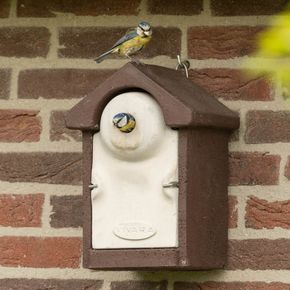
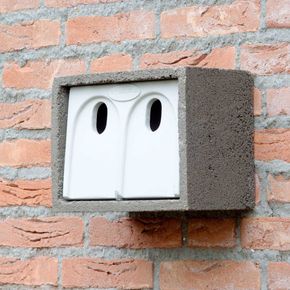
A nest box with an entrance hole of around 32–35 mm is suitable, while specially designed sparrow terraces with several separate nesting chambers can provide space for more than one breeding pair.
Position the nest box in a quiet, sheltered spot where cats and other predators cannot easily reach it. Under the eaves or high on a wall can work well. An east or south-east facing position can help protect the box from strong afternoon sunshine and the wettest weather.
House Sparrows can be very loyal to successful nesting sites, so once they find a good home, they may return year after year.
Photo gallery


Our nest boxes for house sparrows



Facts
| Scientific name |
Passer domesticus
|
|---|---|
| Family |
Passeridae
|
| Habitat |
House Sparrows live closely alongside people and are most often found around houses, farms, villages and towns. They favour places with buildings, hedges or dense vegetation for nesting, together with nearby gardens and open ground for feeding. House Sparrows are resident and can be seen throughout the year.
|
| Food |
Adult House Sparrows mainly eat seeds and grains, while insects and other small invertebrates become particularly important when they are feeding their chicks. Garden visitors readily take seed mixes, sunflower seeds, millet and other small seeds.
|
| length |
14.5cm
|
| Weight |
22-32g
|
| Lifespan |
1 - 23 years
|
| Breeding season |
March - August
|
| Nest |
House Sparrows nest in cavities in buildings, roof spaces, walls and trees and readily use nest boxes. They like to breed close to other House Sparrows, so multi-compartment sparrow terraces can work particularly well. An entrance hole of around 32 mm is suitable.
|
| Song and call |
The House Sparrow is a chatty rather than musical bird. Its most familiar sound is a repeated “cheep” or “chirrup”, with males giving persistent calls around nesting sites. A flock of House Sparrows can produce a lively chorus of chirps and chatter.
|
| Identification |
Male House Sparrows have a grey crown, chestnut-brown sides to the head, pale cheeks and a black bib. Females are more subtly coloured in brown and grey with a pale stripe behind the eye. Young birds resemble females and lack the male's bold head markings.
|
| Broods |
3–5 pale eggs with brown or grey markings. Usually 2–3 broods in a season.
|
Our food for house sparrows


Videos
Frequently asked questions about the house sparrow
Are house sparrows protected in the UK?
Yes. House sparrows and their active nests are protected under UK wildlife legislation.
Why are there fewer house sparrows than there used to be?
House sparrow numbers have declined substantially, with factors including reduced nesting opportunities, changes in food availability and loss of insect-rich habitat.
Do house sparrows breed in nest boxes?
Yes. House sparrows readily use nest boxes and often benefit from multi-compartment sparrow terraces because they prefer nesting close to other sparrows.
What do house sparrows eat?
House sparrows mainly eat seeds and grains, supplemented with insects during the breeding season. Chicks depend heavily on insect food.
How can you attract house sparrows to your garden?
Provide several nest sites, dense shrubs, fresh water, seed-rich feeding areas and insect-friendly planting. Sparrows particularly value gardens where they can feed and shelter close together.