

About the Long-tailed Tit
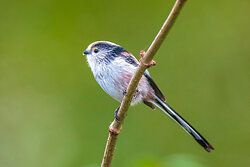
The Long-tailed Tit (Aegithalos caudatus) is one of the most charming small birds found across the UK and Ireland. Despite its name, it isn’t actually a true tit, but belongs to a closely related family of birds. Its most obvious feature is the remarkably long tail, which can make up more than half of its overall length.
Adults have a tiny, rounded body with a white head, bold black markings and soft pink tones on the breast and wings. Their delicate colouring, combined with that oversized tail, makes them easy to recognise as they flit through trees and shrubs.
Long-tailed Tits are highly sociable, especially outside the breeding season. They often travel through gardens, woodland and hedgerows in busy family groups, moving quickly from branch to branch while keeping in touch with a stream of high-pitched calls.
Food for Long-tailed Tits
Long-tailed Tits mainly eat insects and other small invertebrates, including their eggs and larvae. Their tiny bills are ideal for picking food from leaves, twigs and bark as they move through trees and shrubs. Seeds may also be eaten occasionally during autumn and winter.
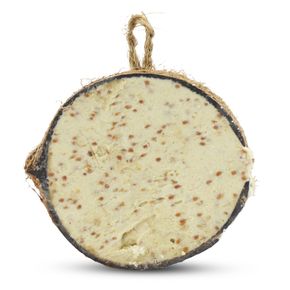
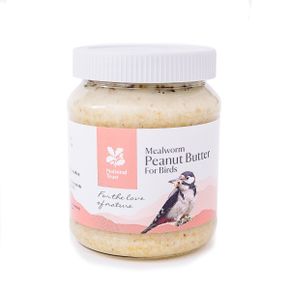
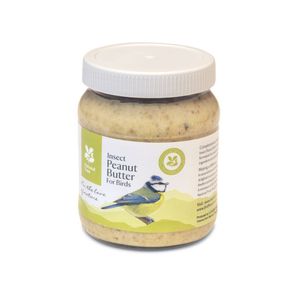
In gardens, Long-tailed Tits can be attracted to high-energy foods, particularly during colder weather when insects are harder to find. Suet and other soft, energy-rich bird foods can be especially appealing, and a whole flock may suddenly descend on a feeder together.
Planting shrubs and trees and keeping your garden rich in insects gives these energetic little birds plenty of natural places to forage throughout the year.
Nesting habitats for Long-tailed Tits
Long-tailed Tits don’t use traditional nest boxes. Instead, they build one of the most intricate nests of any garden bird: a flexible, domed structure woven from moss, lichen and spiders’ webs and carefully camouflaged among dense shrubs, hedges or trees.
Inside, the nest is lined with a remarkable number of soft feathers, creating a warm and snug space for the eggs and growing chicks.
You can help nesting Long-tailed Tits by providing plenty of dense shrubs, hedges and undisturbed vegetation. Avoid cutting back occupied nesting areas during the breeding season and allow spiders and insects to thrive — even their webs can become valuable building material.
A garden with plenty of leafy cover and insect life offers Long-tailed Tits food, shelter and the raw materials they need to create their extraordinary little homes.
Photo gallery
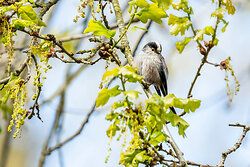
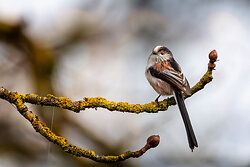

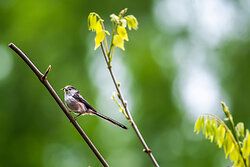
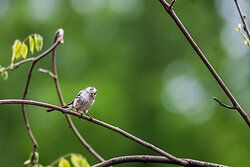
Our food for long-tailed tits




Facts
| Scientific name |
Aegithalos caudatus
|
|---|---|
| Family |
Aegithalidae
|
| Habitat |
Deciduous woodlands, thick hedgerows, scrub, parks, and suburban gardens.
|
| Food |
Long-tailed Tits mainly eat insects, spiders, larvae and insect eggs, which they pick from leaves, twigs and bark. During colder weather they may also visit garden feeders for soft, energy-rich foods such as suet and insect-based fat products.
|
| Length |
13-15cm
|
| Weight |
8-10g
|
| Lifespan |
1 - 3 years
|
| Breeding season |
April-June
|
| Nest |
Long-tailed Tits build remarkable domed nests from moss, lichen and spiders’ webs, usually hidden among dense shrubs, hedges or trees. The inside is lined with large numbers of soft feathers. They do not normally use traditional nest boxes.
|
| Song and call |
The Long-tailed Tit has a quiet, rather simple song, but its contact calls are much more noticeable. Family groups constantly exchange high-pitched “see-see-see” notes and sharper trilling calls as they move through trees and shrubs, so you may hear a flock before you see it.
|
| Identification |
Long-tailed Tits have tiny rounded bodies and remarkably long black-and-white tails that can account for more than half their total length. Adults are patterned in white, black and soft pink tones, with a tiny dark bill. Young birds have darker facial markings than adults.
|
| Broods |
8–12 white eggs with reddish-brown speckles. Usually 1 brood in a season.
|
Frequently asked questions about long-tailed tits
Do long-tailed tits breed in nest boxes?
Usually not. Long-tailed tits build their own elaborate, enclosed nests from moss, lichen and spider silk, normally hidden deep within shrubs, hedges or trees.
Why do you often see long-tailed tits in groups?
Long-tailed tits are highly social. Outside the breeding season, family groups join together and travel through trees and gardens in lively flocks while constantly keeping in contact.
Do long-tailed tits visit garden feeders?
Yes, particularly during colder weather. Long-tailed tits naturally eat insects and spiders but may visit gardens for suet, fat-based foods and other high-energy foods in winter.