

About the Tree Sparrow
The Tree Sparrow (Passer montanus) is a small, sociable bird that can easily be mistaken for a House Sparrow at first glance. Look a little closer, though, and there are some handy clues. Tree Sparrows have a rich chestnut-brown crown, white cheeks with a distinctive black spot and a small black bib. Males and females look very similar, unlike House Sparrows, where the sexes are much easier to tell apart.
Tree Sparrows are slightly smaller than House Sparrows and are more strongly associated with farmland, hedgerows and woodland edges than busy towns and city centres. They often live and breed in small, loose colonies, so where you spot one, there may well be more nearby.
They are found locally across parts of Britain and Ireland rather than being evenly distributed. In the UK, Tree Sparrow numbers fell dramatically during the late 20th century and the species remains Red-listed, making suitable feeding and nesting habitat particularly valuable.
Food for Tree Sparrows
Tree Sparrows mainly eat seeds and grains, particularly outside the breeding season. During spring and summer, insects and other small invertebrates become especially important because they provide the protein needed by growing chicks.
In gardens and feeding areas, Tree Sparrows will readily eat sunflower seeds, millet and good-quality seed mixes. They may visit bird tables and hanging feeders, often feeding alongside other sparrows and finches.
You can support them naturally too. Seed-bearing plants, wildlife-friendly field margins, hedges and insect-rich areas all provide useful feeding opportunities throughout the year.
Nest boxes for Tree Sparrows
Tree Sparrows are cavity nesters and naturally use holes in trees, old buildings and other sheltered spaces. Where natural cavities are limited, they can readily use suitable nest boxes.
A nest box with an entrance hole of around 28 mm is a good choice for Tree Sparrows. Because they often breed close to one another, placing several suitable nest boxes in the same general area can be more attractive than offering just one.
Choose a quiet, sheltered position that is safely out of reach of cats and other predators. Trees, farm buildings and other peaceful locations close to good feeding habitat can all work well.
Providing suitable nest sites alongside seed-rich vegetation and plenty of insects can give Tree Sparrows exactly what they need to raise their next generation.
Photo gallery


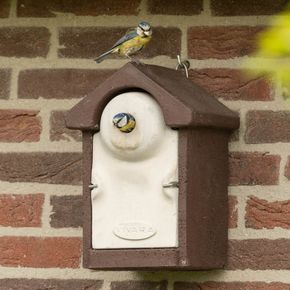
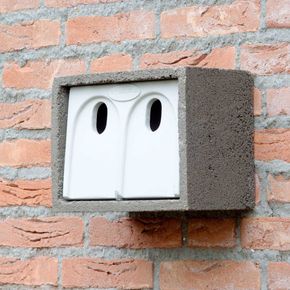
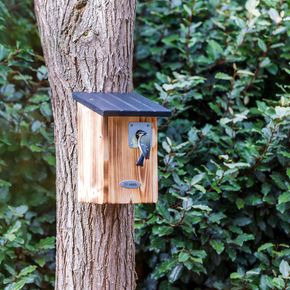
Our Nest boxes for Tree Sparrows






Facts
| Scientific name |
Passer montanus
|
|---|---|
| Family |
Passeridae
|
| Habitat |
Open countryside, farmland, woodland edges, wetlands, and rural gardens.
|
| Food |
Tree Sparrows mainly eat seeds and grains, while insects and other small invertebrates are particularly important when adults are feeding their chicks. Garden visitors readily take millet, sunflower seeds and good-quality small-seed mixes.
|
| Length |
12-14cm
|
| Weight |
18-29g
|
| Lifespan |
1 - 13 years
|
| Breeding season |
April-August
|
| Nest |
Tree Sparrows nest in holes in trees, old buildings and other sheltered cavities and readily use suitable nest boxes. They often breed close to other Tree Sparrows, so several boxes can be placed in the same area. An entrance hole of around 28 mm is suitable.
|
| Song and call |
The Tree Sparrow has a simple collection of chirping and chattering calls rather than an elaborate song. Its common call is a short, slightly sharper “chip” than that of the House Sparrow. Groups keep up a gentle stream of calls while feeding and moving together.
|
| Identification |
Tree Sparrows have a rich chestnut-brown crown, white cheeks marked with a distinctive black spot and a small black bib. Males and females look almost identical. They are slightly smaller and neater in appearance than House Sparrows.
|
| Broods |
4–7 white eggs with brown or grey markings. Usually 2–3 broods in a season.
|


Videos
Frequently asked questions about tree sparrows
What is the difference between a tree sparrow and a house sparrow?
Tree sparrows have chestnut-brown crowns and distinctive black cheek spots. Male house sparrows have grey crowns and lack the black cheek patch.
Are tree sparrows rare in the UK?
Yes. Tree sparrows have declined dramatically in the UK and are now much less widespread than house sparrows.
Do tree sparrows breed in nest boxes?
Yes. Tree sparrows are cavity nesters and readily use suitable nest boxes, particularly where several nesting opportunities are available close together.
What food can you give tree sparrows?
Tree sparrows mainly eat seeds and grains. Sunflower seeds, millet and suitable seed mixes can be offered, with insects becoming important during breeding.