
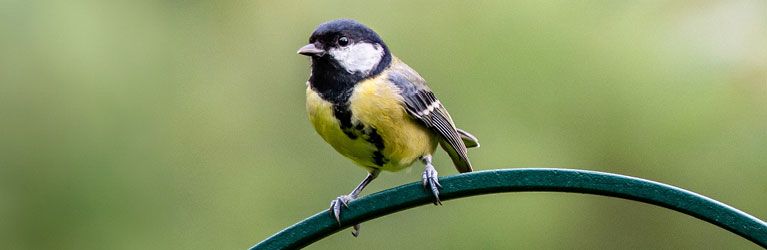
About the Great Tit
The European population, of this bird, is regarded as Secure by BirdLife International.
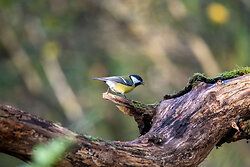
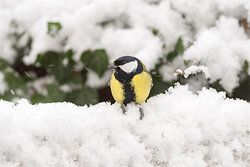
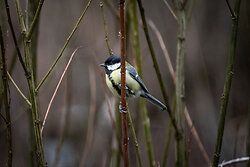
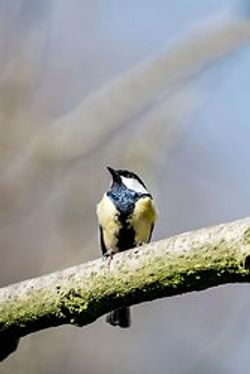
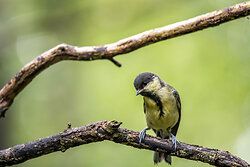
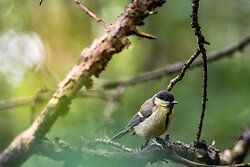
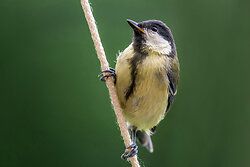
The Great Tit is one of the most familiar birds in UK gardens. It’s easy to recognise by its glossy black head, bright white cheeks and greenish back. Its blue-grey wings feature a white wing bar, while the yellow underparts are marked by a bold black stripe down the middle. This stripe is usually broader in males than in females.
Young Great Tits are a little less colourful, with more muted plumage and yellowish cheeks. They initially lack the strong black belly stripe of the adults, which becomes more noticeable as they mature.
As the largest of the UK’s tit species, the Great Tit is a confident visitor to gardens, parks and woodland. In winter, you’ll often see them at bird tables and feeders, where seeds and other energy-rich foods provide a welcome boost. They also spend plenty of time searching for food among trees, shrubs and on the ground.
Insects form an important part of a Great Tit’s natural diet, particularly during the breeding season when hungry chicks need plenty of protein. At other times of year, they readily eat seeds, nuts and other garden bird foods.
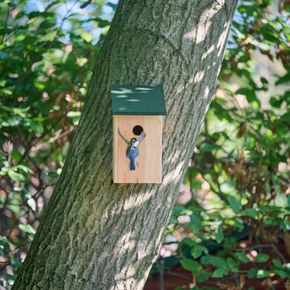
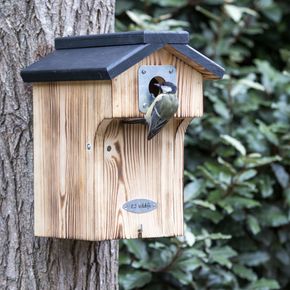
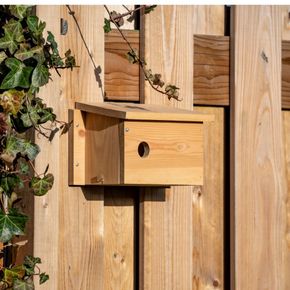
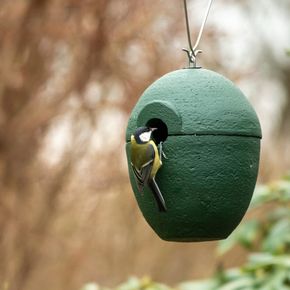
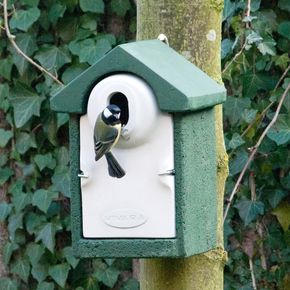
Great Tits naturally nest in holes in trees, but suitable cavities aren’t always easy to find. They readily use nest boxes in gardens, with an entrance hole of around 30–32 mm providing a good fit. Inside, the female builds a cosy nest from materials such as moss, dry grass, hair, wool and feathers.
Great Tits living around towns and gardens can sometimes begin breeding earlier than their woodland neighbours. Changes in temperature, food availability and artificial lighting may all play a part in influencing when the breeding season begins.
Photo gallery
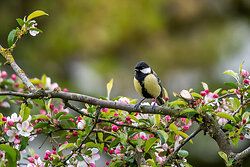

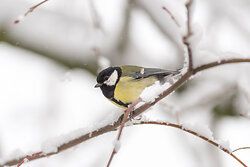

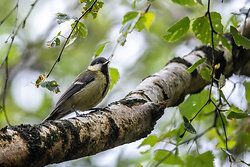




Our Nest boxes for Great Tits





Facts
| Scientific name |
Parus major
|
|---|---|
| Family |
Paridae
|
| Habitat |
Great Tits live in woodland, parks, gardens, farmland and other areas with plenty of trees and shrubs. They adapt particularly well to urban and suburban habitats, provided there are suitable places to feed and nest. Great Tits are widespread throughout the UK and can be seen all year round.
|
| Food |
Great Tits eat insects, caterpillars, spiders and other small invertebrates, particularly during the breeding season when chicks need plenty of protein. They also eat seeds and nuts. At garden feeders, sunflower seeds, peanuts and energy-rich suet foods are popular choices.
|
| Length |
14cm
|
| Weight |
14 - 22g
|
| Lifespan |
1 - 10 years
|
| Breeding season |
April-June
|
| Nest |
Great Tits nest in holes in trees and other sheltered cavities and readily use nest boxes. A box with an entrance hole of around 28–32 mm provides suitable access. The female builds the nest from materials such as moss, grass, hair, wool and feathers.
|
| Song and call |
The Great Tit has a loud and varied voice with many different songs and calls. Its best-known song is a clear, repeated two-note phrase often described as “teacher-teacher”. Because Great Tits have such a wide repertoire, they can sometimes sound surprisingly like other birds.
|
| Identification |
Great Tits have a glossy black head, white cheeks, a greenish back and yellow underparts divided by a bold black stripe. The stripe is usually broader in males than females. Young birds are duller, with yellowish cheeks and less distinct black markings.
|
| Broods |
5–12 reddish-spotted white eggs. Usually 1 brood in a season.
|
Our food for great tits


Videos
Frequently asked questions
What is the difference between a Great Tit and a Blue Tit?
The Great Tit is larger, with a black head, white cheeks and a black stripe running down its yellow breast. The Blue Tit is smaller and has a blue cap on a white head. If you see a tit hanging upside down from a branch, it’s usually the more agile Blue Tit.
Which nest box is suitable for a Great Tit?
A nest box with a 32 mm entrance hole is ideal. Great Tits naturally nest in tree cavities, but these can be scarce in gardens, so they readily use nest boxes. Place the box in a quiet spot, out of reach of cats.
What does a Great Tit eat?
In summer, Great Tits mainly eat insects and caterpillars, which they also feed to their chicks. After the breeding season, they switch to seeds. In the garden, sunflower seeds, peanuts and peanut cake with insects are favourites, offered from a feeder or bird table.
How many eggs does a Great Tit lay?
Great Tits lay 5 to 12 white eggs with reddish spots per clutch, quite a number for such a small bird. They breed once or twice a year, between April and June. The nest is made from moss, grass and wool, with a soft lining of hair and down.
How do you attract a Great Tit to your garden?
A well-stocked feeder and a suitable nest box are a great start. The Great Tit is Europe’s largest and most numerous tit and breeds in almost any garden with some greenery. Interestingly, Great Tits in gardens lay their eggs several weeks earlier than those in woodland, probably due to artificial lighting.