

About the Blackbird
The Blackbird (Turdus merula) is one of the UK’s most familiar garden birds. Adult males are easy to recognise by their glossy black plumage, bright yellow bill and yellow eye-ring. Females are dark brown with a slightly paler throat and breast, while young birds resemble females but have lighter speckling across the body and wings.
Blackbirds were once mainly associated with woodland, but today they’re equally at home in gardens, parks and towns. Unlike Starlings, they don’t usually gather in large flocks and are more often seen alone or in pairs.
Their rich, melodic song is one of the great sounds of spring. Males often sing from rooftops, trees and other prominent perches, especially early in the morning and towards evening.
Food for Blackbirds
Blackbirds spend much of their time feeding on or close to the ground. In the wild, they eat a varied diet that includes earthworms, insects, snails, berries and fruit.
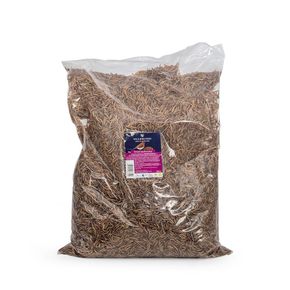
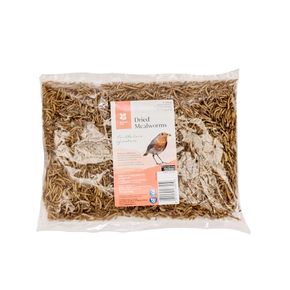
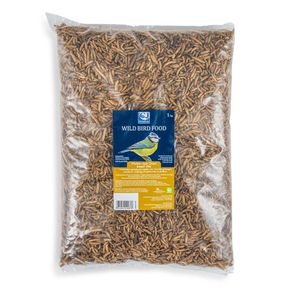
In the garden, they’ll happily tuck into soft foods, fat-based foods, raisins, chopped apple and mealworms. Because they’re natural ground feeders, food is best offered on a bird table, ground feeding tray or directly on a clean feeding area rather than in hanging feeders.
Keeping part of your lawn, borders and leaf litter a little more natural can also give Blackbirds plenty of opportunities to hunt for worms and insects.
Nesting habitats for Blackbirds
Blackbirds are not cavity nesters, so traditional nest boxes aren’t usually suitable. Instead, they build sturdy, cup-shaped nests tucked away in dense hedges, shrubs, climbing plants and small trees.
You can help nesting Blackbirds by growing thick native shrubs and allowing hedges to retain plenty of natural cover. Ivy and other dense climbing plants can also provide excellent nesting spots, helping to keep eggs and chicks hidden from predators.
A garden with a mix of dense cover, open feeding areas and natural vegetation can provide Blackbirds with everything they need to feel at home.
Photo gallery


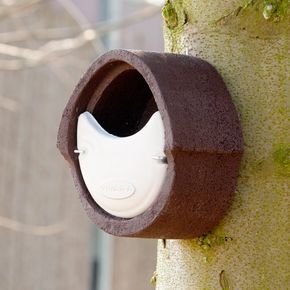
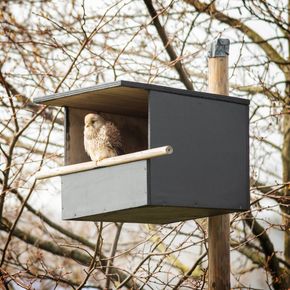
Our nest boxes for Blackbirds



Facts
| Scientific name |
Turdus merula
|
|---|---|
| Family |
Turdidae
|
| Habitat |
Blackbirds live in woodland, hedgerows, farmland, parks and gardens, as well as towns and cities. They favour habitats that combine dense vegetation for nesting with open ground or lawns where they can search for worms and other food. Blackbirds are widespread throughout the UK and can be seen all year round.
|
| Food |
Blackbirds eat earthworms, insects, larvae, snails and other small invertebrates, as well as berries and fruit. Garden visitors may take mealworms, raisins, chopped apple, soft bird food and suitable suet foods, preferably offered on the ground or a bird table.
|
| Length |
24-25cm
|
| Weight |
80-125g
|
| Lifespan |
1 - 21 years
|
| Breeding season |
March - July
|
| Nest |
Blackbirds build sturdy, cup-shaped nests in dense hedges, shrubs, climbing plants, trees and sheltered ledges. They may occasionally use a well-positioned open-fronted nest box. Thick vegetation such as ivy can provide particularly valuable nesting cover.
|
| Song and call |
The Blackbird is famous for its rich, mellow and flute-like song, usually delivered in relaxed phrases with short pauses between them. Males often sing from rooftops, trees and other high perches. Alarm calls include sharp “chink” notes and rapid, excited rattling sounds.
|
| Identification |
Male Blackbirds have glossy black plumage, a bright yellow-orange bill and a yellow eye-ring. Females are dark brown with a paler, slightly streaked throat and breast. Juveniles resemble females but have more obvious pale spotting and streaking.
|
| Broods |
3–5 blue-green eggs with reddish-brown markings. Usually 2–3 broods in a season.
|

Videos
Frequently Asked questions about blackbirds
Why are there fewer blackbirds than there used to be?
Blackbird numbers have declined in parts of the UK over recent decades, with factors including habitat change, reduced food availability and disease likely playing a role. Wildlife-friendly gardens can provide valuable food and shelter.
What do blackbirds eat?
Blackbirds eat earthworms, insects and other invertebrates, as well as berries and fruit. Mealworms, soft fruit and suitable ground-feeding foods can also be offered in gardens.
Do blackbirds breed in nest boxes?
Not usually in a traditional enclosed box. Blackbirds prefer shrubs, hedges, climbing plants and sheltered ledges, although they may use a well-hidden open-fronted nest box.
How many times a year do blackbirds breed?
Blackbirds commonly raise two or three broods a year. Breeding generally begins in early spring and can continue into summer.
When do blackbirds sing?
Blackbirds sing most strongly during spring and early summer. Males often sing from rooftops, trees and other high perches, particularly around dawn and dusk.