

About the House Martin
The House Martin (Delichon urbicum) is a graceful summer visitor to the UK and Ireland, instantly recognisable by its glossy blue-black upperparts, bright white underside and distinctive white rump. Its short, forked tail and compact shape help distinguish it from the Swallow, which has much longer tail streamers.
House Martins spend much of their time on the wing, swooping and gliding through the air as they hunt for insects. They usually arrive in spring and stay through summer before migrating south to Africa in autumn. In towns and villages, they’re often seen circling around houses and other buildings where suitable nesting sites are available.
These sociable birds often nest close to one another, creating small colonies beneath the eaves of buildings. Their cheerful twittering calls and busy aerial displays are a familiar sign that summer has arrived.
Food for House Martins
House Martins are insect eaters and catch almost all of their food while flying. Their diet consists of small airborne insects, which they expertly scoop up with their wide mouths as they twist and turn through the sky.
Because they don’t usually visit bird feeders, the best way to provide food for House Martins is to support a healthy population of insects. Wildlife-friendly planting, ponds, flowering plants and avoiding unnecessary pesticide use can all help create a garden rich in the flying insects they depend on.
This is especially important during the breeding season, when adults make repeated hunting trips to collect insects for their growing chicks.
Nesting habitats for House Martins
House Martins are famous for their carefully constructed mud nests. Pairs collect small pellets of wet mud and build them into a neat, enclosed cup, usually tucked beneath the eaves of houses and other buildings. A single nest can require around a thousand individual mud pellets to complete.
They often return to familiar nesting areas year after year, and several pairs may build nests side by side. Suitable nesting sites have become harder to find in some places, so existing House Martin nests are especially valuable.
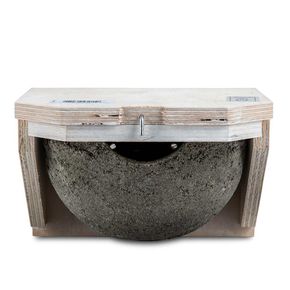
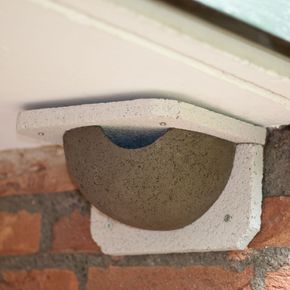
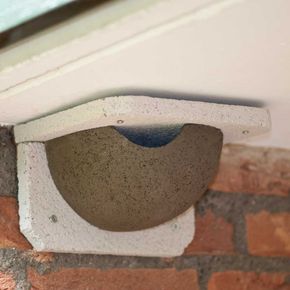
You can also help by installing a specially designed House Martin nest cup beneath suitable eaves. Position it high on a building with a clear flight path and some shelter from extreme weather. Providing an area of damp, bare soil or mud nearby can also give House Martins the building material they need for nest repairs and new nests.
With a welcoming nesting spot and plenty of insects nearby, your home could become part of their extraordinary annual journey between the UK and Ireland and their wintering grounds in Africa.
Photo gallery


Our nest boxes for swallows




Facts
| Scientific name |
Delichon urbica
|
|---|---|
| Family |
Hirundinidae
|
| Habitat |
House Martins live around towns, villages, farmland and open countryside, particularly where buildings provide suitable nesting sites and nearby open areas support plenty of flying insects. They often feed over fields, wetlands and water. House Martins are summer visitors, arriving in spring and leaving again in autumn.
|
| Food |
House Martins feed almost entirely on small flying insects, which they catch in the air. They do not normally visit bird feeders, so the best way to support their food supply is to encourage plenty of insects with flowering plants, ponds and pesticide-free wildlife-friendly areas.
|
| Length |
12,5cm
|
| Weight |
15-21g
|
| Lifespan |
1 - 14 years
|
| Breeding season |
May - August
|
| Nest |
House Martins build enclosed cup-shaped nests from mud beneath eaves and other sheltered parts of buildings, leaving a small entrance near the top. They often nest in colonies and may readily use artificial House Martin nest cups. A nearby source of damp mud can help with nest building and repairs.
|
| Song and call |
The House Martin has a cheerful, twittering song made up of soft chirps and rolling notes. Its flight calls are short and conversational, and colonies can produce a constant gentle chatter as adults come and go from their nests.
|
| Identification |
House Martins have glossy blue-black upperparts, a clean white underside and a striking white rump. Their tail is short and shallowly forked, helping distinguish them from Barn Swallows. Males and females look very similar.
|
| Broods |
3–5 white eggs. Usually 2 broods in a season, sometimes 3.
|
Frequently asked questions about the house martin
What is the difference between a house martin and a barn swallow?
House martins have a bright white rump and white underparts. Swallows have red throats, dark breast bands and much longer tail streamers.
Are house martins rare in the UK?
House martins have declined significantly in the UK, although they remain widespread summer visitors in many areas.
Where do house martins build their nests?
House martins build enclosed mud nests beneath eaves, cliffs and other overhangs, usually with a small entrance near the top.
When are house martins in the UK?
House martins normally arrive from April onwards and remain until late summer or autumn before migrating back to Africa.