

About the Swallow
The Swallow (Hirundo rustica), also known as the Barn Swallow, is one of the most recognisable summer visitors to the UK and Ireland. Its glossy blue-black upperparts, warm red throat, pale underside and deeply forked tail with long streamers give it an unmistakably elegant shape in flight.
Swallows spend much of their lives on the wing, swooping low over fields, meadows and gardens in pursuit of flying insects. Their fast, graceful flight and cheerful twittering calls are a familiar sight and sound from spring through to autumn.
Most Swallows arrive from Africa in spring, with the first birds often appearing from March onwards, and leave again in autumn. Many travel all the way to southern Africa for the winter, making their annual migration one of the most remarkable journeys undertaken by a garden bird.
Food for Swallows
Swallows are specialist insect eaters. They catch flies, midges, beetles and other small airborne insects while flying, often skimming just above grassland or water where insects are plentiful.
Because they feed almost entirely on live insects caught in the air, Swallows are unlikely to visit conventional bird feeders. The best way to support them is to create an insect-rich garden or outdoor space.
Flowering plants, ponds, long grass and wildlife-friendly borders can all encourage more insects. Avoiding unnecessary pesticide use also helps ensure there is plenty of natural food available, particularly during the breeding season when adults are busy feeding hungry chicks.
Nesting habitats for Swallows
Swallows traditionally nest inside barns, sheds, stables and other open buildings, which explains the alternative name Barn Swallow. They build an open cup-shaped nest from mud mixed with plant material, usually placing it on a ledge, beam or other sheltered support.
Unlike House Martins, which generally build enclosed nests beneath exterior eaves, Swallows prefer accessible indoor or semi-enclosed spaces where they can fly directly to and from the nest.
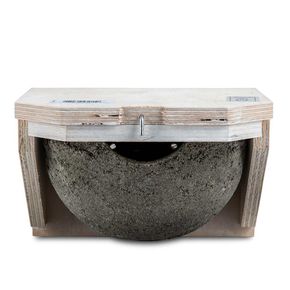
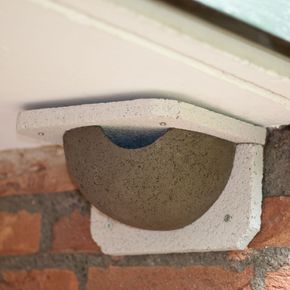
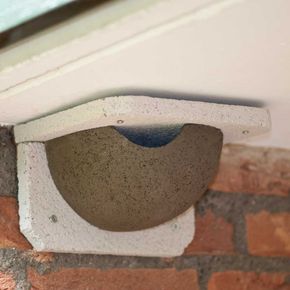
You can help nesting Swallows by keeping suitable access points open during the breeding season and providing a secure nesting ledge or specially designed Swallow nest cup. A nearby patch of damp mud can also provide useful nest-building material.
With plenty of flying insects and a safe place to nest, Swallows may return to the same area year after year, bringing one of the unmistakable sights and sounds of summer with them.
Photo gallery


Our nest boxes for swallows




Facts
| Scientific name |
Hirundo rustica
|
|---|---|
| Family |
Hirundinidae
|
| Habitat |
Swallows favour open countryside, farmland, meadows and wetlands, especially where barns, stables and other accessible buildings provide sheltered nesting sites. They often hunt low over fields and water where flying insects are abundant. Swallows are summer visitors, arriving in spring and migrating south again in autumn.
|
| Food |
Barn Swallows feed on flying insects such as flies, midges and beetles, catching their prey while on the wing. They do not normally use bird feeders, so insect-rich habitats with flowering plants, ponds, meadows and longer grass provide the most useful natural food supply.
|
| Length |
19cm
|
| Weight |
22g
|
| Lifespan |
1 - 8 years
|
| Breeding season |
May - August
|
| Nest |
Barn Swallows build open, cup-shaped nests from mud mixed with grass and other plant material. They usually nest inside barns, sheds, stables and other accessible buildings, placing the nest on a beam or ledge. Artificial Swallow nest cups can also be used when positioned in a suitable open building.
|
| Song and call |
The Barn Swallow has a cheerful, flowing song made up of twittering and warbling phrases, often ending in a distinctive dry rattle. Its contact calls are short and sharp and are frequently heard as birds swoop around feeding and nesting areas.
|
| Identification |
Barn Swallows have glossy blue-black upperparts, a warm reddish face and throat, pale underparts and a deeply forked tail. Adults have long outer tail feathers known as streamers, which are generally longer in males. Juveniles have shorter tails and duller colouring.
|
| Broods |
4–5 white eggs with reddish-brown markings. Usually 2 broods in a season, sometimes 3.
|
Frequently asked questions about swallows
When do barn swallows return to the UK?
Swallows usually begin returning from Africa during March and April, becoming widespread across Britain through spring.
Where do barn swallows breed?
Swallows typically nest inside barns, sheds and other open buildings, constructing cup-shaped nests from mud and plant material.
What is the difference between a barn swallow and a house martin?
Swallows have red throats and deeply forked tails with long streamers. House martins have white rumps, white underparts and shorter tails.
Are barn swallows threatened in the UK?
Swallow numbers fluctuate and have shown declines in parts of the UK, although they remain widespread summer visitors.