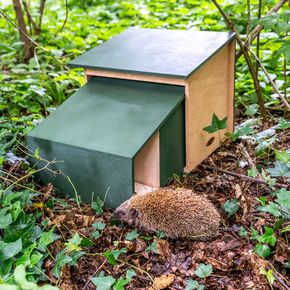
A specially designed hedgehog house offers a secure haven where they can sleep safely during the day, rear their young hoglets in the summer, and securely hibernate throughout the cold winter months. Explore our range of durable, predator-proof habitats to give your local hedgehogs the perfect place to call home.
The importance of hedgehog houses with ventilation
Not every hedgehog house on the market is safe. Many cheap, mass-produced boxes are designed to look charming on a shelf rather than to protect a living animal, and they can put hedgehogs at serious risk. The most common failings are an entrance hole that is too wide (letting cats, foxes and badgers reach inside), no internal baffle or defence tunnel, poor ventilation that traps damp and leads to deadly mould. Thin walls that give no insulation against frost, and an unsealed base that floods in heavy rain. A hibernating hedgehog in a damp, badly built box can freeze or develop fatal respiratory illness without ever waking. In short, the wrong house becomes a trap rather than a refuge. That is exactly why the design details below matter so much, and why every CJ Wildlife house is engineered to meet them. Our hedgehog houses ensure:
- Predator Protection: Our premium houses feature built-in defence tunnels or restricted internal baffles. This naturally deters predators like foxes, badgers, and cats from reaching inside with their paws.
- Weather Resistance: Wild hedgehogs need to stay dry, especially during hibernation. Our houses are crafted from water-resistant, durable materials that insulate against the cold and shield against heavy British rain.
- Proper Ventilation: Good air circulation is vital to prevent condensation and mould build-up inside the nest, ensuring a healthy environment for sleeping or nesting families.
- The Golden 13cm Rule: A safe hedgehog house relies entirely on precision engineering. The entry tunnel must measure approximately 13cm x 13cm. This specific size is large enough for the biggest wild European hedgehogs (even pregnant females) to pass through comfortably, but strictly too small and narrow for foxes, badgers, and cats to squeeze into.
|
House Type
|
Wooden Hedgehog Houses
|
Wicker & Igloo Hogitats
|
|
Material Benefits
|
Robust, highly insulated, excellent long-term durability, easy to clean with removable roofs.
|
Blends naturally into garden borders, lightweight, budget-friendly, mimics natural nests.
|
|
Best Used For
|
Year-round nesting, summer breeding, and safe winter hibernation.
|
Summer daytime shelter and quick seasonal nesting.
|
Setting up your CJ Wildlife hedgehog house
To make your new hedgehog house as attractive and safe as possible, follow these key guidelines:
-
Choose the perfect location
Place the house in a quiet, sheltered corner of your garden, away from busy pathways, bright outdoor security lights, and areas where dogs or cats frequently play. Position the entrance away from prevailing winds (preferably facing North or East) and tuck it against a wall, fence, or under thick shrubbery to make it feel like a natural hiding spot.
-
Add comfortable nesting material
While hedgehogs are excellent nest builders, you can make the house instantly inviting by filling it about half full with crisp, dry leaves, clean straw, or hay. Avoid using meadow hay that might contain sharp seeds, and never use synthetic materials or cotton wool, which can easily tangle around their legs.
-
Pair with a safe dining area
Hedgehogs appreciate a reliable food source near their home, but never place food directly inside their sleeping quarters, as this will attract unwanted pests and soil their bedding. Instead, set up a separate hedgehog feeding station nearby using high-quality hedgehog food and a shallow dish of fresh water.
Always check your garden before clearing it
By placing a hedgehog house in your garden, you are actively inviting these wonderful mammals into your outdoor space. However, this means you must take extra care during routine garden maintenance. Mowers, strimmers, and garden forks are among the leading causes of severe injury and death to wild hedgehogs in the UK.
- Check before strimming: Always thoroughly check long grass, brambles, and the bases of hedges by hand before using power tools.
- Compost heaps and log piles: Hedgehogs love to nest in compost heaps and log piles. Never plunge a garden fork blindly into a heap.
- Bonfire safety: If you are building a bonfire, always build it on the day you intend to light it, or completely rebuild it just before ignition. An undisturbed pile of wood looks like the ultimate luxury hedgehog house to a foraging hog, and many are tragically burned alive each year.
Hedgehog houses throughout the seasons
Hedgehogs will use their houses differently depending on the rhythm of the seasons. Understanding their yearly cycle helps you know when to support them and when to leave them in peace.
|
Season
|
How Hedgehogs Use the House
|
Advice
|
|
Spring (Mar – May)
|
Emerging from hibernation, hedgehogs use the houses for secure daytime sleeping as they recover.
|
Leave fresh nesting material nearby. Keep a steady supply of food and water close by.
|
|
Summer (Jun – Aug)
|
Breeding season. Female hedgehogs use sturdy houses as maternity nests to give birth and nurse hoglets.
|
Do not disturb. Peeking inside during this time can cause a stressed mother to abandon her young.
|
|
Autumn (Sep – Nov)
|
Hedgehogs scout for the safest, driest houses to build their thick 'hibernacula' nests for winter.
|
Clean out empty houses in early autumn before hibernation begins. Add plenty of dry leaves.
|
|
Winter (Dec – Feb)
|
Hibernation period. The house becomes a critical life-saving shelter against freezing temperatures.
|
Strict non-disturbance. During heavy snowfall, gently clear snow away from the entrance tunnel to keep ventilation open. Check that the entrance has not frozen solid, ensuring air can flow freely without disturbing the sleeping hog inside.
|
The pre-hibernation period in late autumn is the moment that matters most. As the nights turn freezing, a hedgehog's choice of winter shelter determines its survival. A sturdy, insulated house can be the exact buffer they need against severe ground frost. To help them build a well-insulated nest, leave a pile of dry leaves or straw close to the entrance during October and November. They will drag it inside to make a warm winter blanket.
How to clean and maintain your hedgehog house
Don't worry about pests jumping to your pets: While it is true that wild hedgehog nests can contain fleas and ticks, hedgehog fleas (Archaeopsylla erinacei) are strictly host-specific. This means they cannot survive or breed on humans, cats, or dogs. You can clean the house safely without worrying about infesting your home or household pets.
- Time it perfectly: Only clean the house when you are 100% certain it is unoccupied. The safest window in the UK is April (after they have emerged from hibernation but before breeding starts) or October (after summer litters have moved out but before winter hibernation begins).
- Avoid chemicals: Empty out all old nesting material. Wash the inside thoroughly using boiling water and a stiff brush. Never use chemical disinfectants, soaps, or flea treatments, as the strong scents and residues can harm hedgehogs or deter them from returning.
- Dry completely: Leave the house open to dry completely in the sun before adding fresh, clean straw or dry leaves and putting the roof back on.
Hedgehog houses developed together with wildlife experts
When you choose a hedgehog house from CJ Wildlife, you are investing in a sanctuary designed with hedgehog safety as the absolute priority. We collaborate closely with leading wildlife experts and hedgehog preservation societies to ensure every house features correct ventilation, safe non-toxic materials, and proven predator-proof entry systems.
Unlike the cheap ornamental boxes that look pretty but can put hibernating hedgehogs at risk, every CJ Wildlife house is built to the standards that actually keep hedgehogs alive: a predator-proof 13cm entrance with an internal baffle, cross-ventilation that prevents deadly condensation and mould, insulating weather-treated timber, and a design that stays dry through a British winter. We develop our houses with conservation partners, so what you put in your garden is a genuine refuge, not a hazard. Moreover, we donate over £1 million yearly to fund wildlife conservations such as the National Trust.
Hedgehog house FAQs
Below you'll find the most common questions about choosing and maintaining a hedgehog house.
How long does it take for a hedgehog to move into a new house?
It varies completely. Some hedgehogs will explore and move into a new house on the very first night, while others might take several weeks or even months to trust a new structure. To speed up the process, ensure your garden is accessible via a 'Hedgehog Highway' (a 13cm x 13cm gap under your fence) and place a small trail of kibble leading toward the entrance.
How can I tell if a hedgehog is using the house without disturbing them?
Never lift the roof to check, as this can frighten them away. Instead, place a small, light twig or a few blades of grass across the entrance hole in the evening. If the twig has been pushed aside or flattened by morning, you know a visitor has gone inside. Alternatively, look for small, dark, cigar-shaped droppings nearby.
Do I need to put a floor in my hedgehog house?
Many of our wooden houses come with an open bottom or a wooden floor. An open bottom allows the house to sit naturally on soil or grass, which mimics a wild nest, but it must be placed on a well-drained area. Houses with wooden floors offer extra protection against damp rising from the ground, but they should be lined with a layer of newspaper underneath the straw to make cleaning easier.
What should I do if a predator, like a dog or fox, discovers my hedgehog house?
If a fox or dog is sniffing around the house, don’t panic. As long as your house is equipped with a built-in predator defence tunnel or internal baffle wall, the hedgehog inside is completely safe and out of reach from paws. To give the house extra stability and prevent large animals from tipping it over, you can place a couple of heavy bricks or a flat paving slab securely on top of the roof. Additionally, you can camouflage the house by piling logs, twigs, or garden brambles around the sides, which makes it much harder for larger predators to disturb.
Can multiple hedgehogs share the same house?
Generally, hedgehogs prefer to live alone and are solitary creatures. During the daytime or winter hibernation, a house is typically occupied by just one single hedgehog. However, during the peak summer breeding season, you will find a mother hog sharing the house with her litter of young hoglets. Occasionally, during severe winter cold snaps, young siblings might huddle together for warmth, but as a rule of thumb, providing multiple smaller houses across different quiet corners of your garden is the best way to accommodate a larger hedgehog population without territorial disputes.
Where is the absolute worst place to put a hedgehog house?
You should strictly avoid placing a hedgehog house in low-lying areas of your garden that are prone to waterlogging or flooding during heavy autumn and winter rains. If the nesting material inside gets damp, it loses its insulating properties, which can cause a hibernating hedgehog to freeze or develop respiratory illnesses. Additionally, never place the entrance facing directly towards open lawns, busy garden paths, or south-west winds, as this exposes the interior to cold drafts and makes the habitat feel insecure to wild mammals.
Are all hedgehog houses safe for hedgehogs?
Sadly, many cheap or purely decorative hedgehog houses are not fit for purpose and can even be dangerous. The usual problems are an entrance wide enough for predators, no internal defence baffle, poor ventilation that causes damp and mould, and a base that floods or fails to insulate against frost, all of which can be fatal to a hibernating hedgehog. Before you buy, check for a 13cm x 13cm entrance with an internal baffle, good ventilation, weatherproof insulating materials, and a design that keeps the interior dry. Every CJ Wildlife house is built to meet these criteria.
What should I do if I see a hedgehog out in my garden during the day?
As a strict rule, hedgehogs are nocturnal animals. A hedgehog out during the day is almost always a sign of an animal in severe distress, pain, or trouble. The only exception is a pregnant female gathering nesting materials in the summer, but she will move quickly and with purpose.
If you see a hedgehog that is wobbling, lying still in the sun, curled in the open, or covered in flies, it needs immediate medical help.
- Act quickly: Use a pair of gardening gloves to gently lift the hedgehog into a deep cardboard box lined with an old towel.
- Keep them warm: Place a warm water bottle (wrapped in a towel) inside the box next to them, and provide a shallow dish of fresh water.
- Call for help: Immediately contact a local wildlife rescue centre or call the British Hedgehog Preservation Society (BHPS) helpline on 01584 890 801.